
A slip disc (herniated or bulging disc) happens when the soft inner core of a spinal disc pushes through its outer layer and presses on a nearby nerve, causing back or neck pain that can radiate into the arms or legs. For most people, slip disc physiotherapy is the recommended first-line treatment, and research shows fewer than 1 in 10 people with a herniated disc ever need surgery. This guide explains what physiotherapy for a slip disc actually involves, which exercises help, how long recovery takes, and the warning signs that mean you need urgent medical care rather than exercise.
What Is a Slip Disc?
The spine is made up of vertebrae separated by discs that act as shock absorbers. Each disc has a tough outer ring (the annulus fibrosus) and a soft, gel-like centre (the nucleus pulposus). A slip disc occurs when that inner gel bulges or ruptures through a weakened or torn section of the outer ring. Depending on where the material moves, it can irritate or compress a nearby spinal nerve root, which is what produces the classic pain, numbness, tingling, or weakness associated with the condition.
The terms slipped disc, herniated disc, disc bulge, and prolapsed disc are often used interchangeably, though technically they describe slightly different stages of the same underlying process. Disc problems are most common in the lower back (lumbar spine), particularly at the L4-L5 and L5-S1 levels, and in the neck (cervical spine), but they can occur at any level of the spine.
What Causes a Slip Disc?
Discs weaken gradually with age as they lose water content and become less flexible, which is why disc problems become more common after the age of 30. On top of this natural degeneration, several factors can trigger or accelerate a slip disc:
- Repetitive strain from bending, twisting, or lifting with poor technique
- A single heavy lift or sudden awkward movement, especially lifting while twisting
- Prolonged sitting with poor posture, which increases pressure on the lower discs
- Excess body weight, which adds sustained load to the lumbar spine
- Smoking, which reduces blood supply and nutrient flow to spinal discs
- Genetics, since some people inherit discs that are more prone to degeneration
- High-impact or repetitive-loading sports such as weightlifting, gymnastics, or contact sports when performed with poor form
It is worth noting that many people develop disc bulges without ever identifying a specific triggering event, and disc changes are extremely common on imaging even in people with no pain at all.
Symptoms by Location
Symptoms depend heavily on which part of the spine is affected and whether the bulge is pressing on a nerve root.
Lumbar (Lower Back) Slip Disc
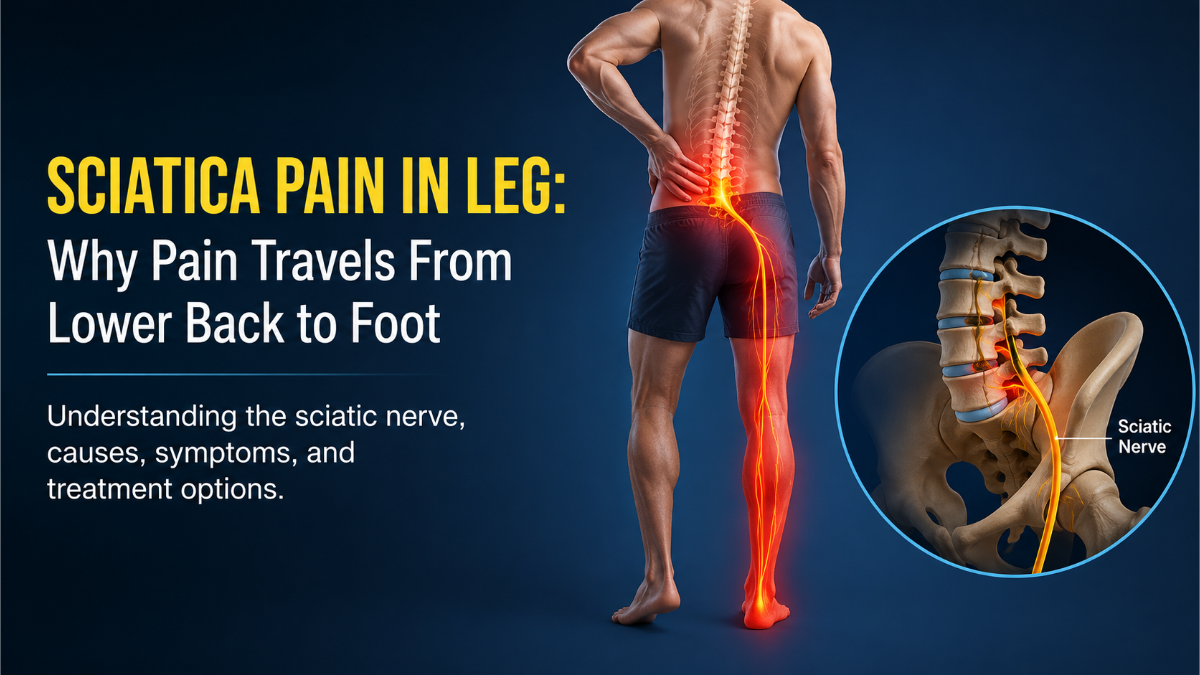
A lumbar disc herniation commonly causes lower back pain along with sciatica, meaning pain, tingling, numbness, or a burning sensation that radiates through the buttock and down one leg, sometimes as far as the foot. Some people also notice weakness when trying to lift the foot or stand on their toes.
Cervical (Neck) Slip Disc
A cervical disc problem tends to cause neck pain along with pain, numbness, or tingling that travels into the shoulder, arm, or hand. Headaches at the base of the skull and grip weakness are also common.
General Signs Across Levels
- Pain that worsens with sitting, bending forward, coughing, or sneezing
- Pain that eases with lying down or gentle movement
- Muscle spasms around the affected area
- Pins and needles or numbness following a specific nerve pathway
- Reduced range of motion in the back or neck
Red Flags: When to Seek Emergency Care
Most slip discs are safely managed with physiotherapy, but a small number of cases involve a medical emergency called cauda equina syndrome, where a large central disc herniation compresses the bundle of nerves at the base of the spinal cord. This requires surgery, typically within 24 to 48 hours, to prevent permanent damage. Go to an emergency department immediately if you experience any of the following alongside back pain:
- New numbness around the groin, inner thighs, or buttocks (saddle numbness)
- Loss of bladder or bowel control, or an inability to urinate
- Sudden, severe weakness or numbness in both legs
- New sexual dysfunction with no other explanation
These symptoms are rare, but they are not something to wait out or try to stretch away. If any of them appear, physiotherapy is not the appropriate first step; urgent medical assessment is.
How a Slip Disc Is Diagnosed
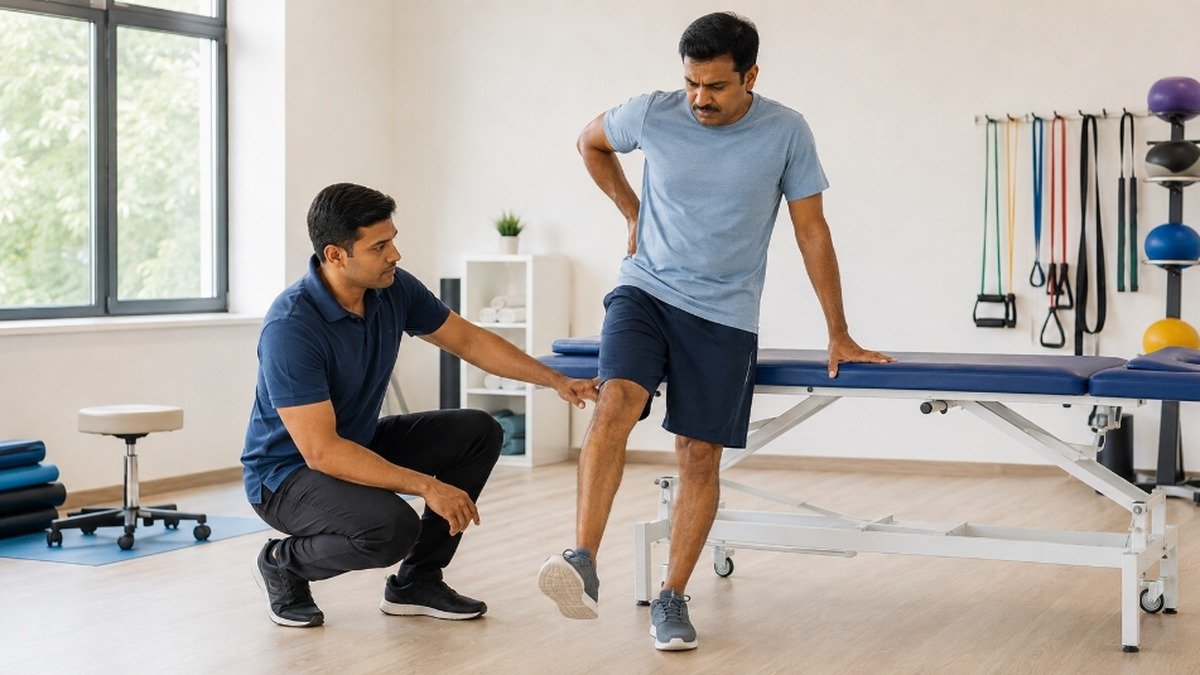
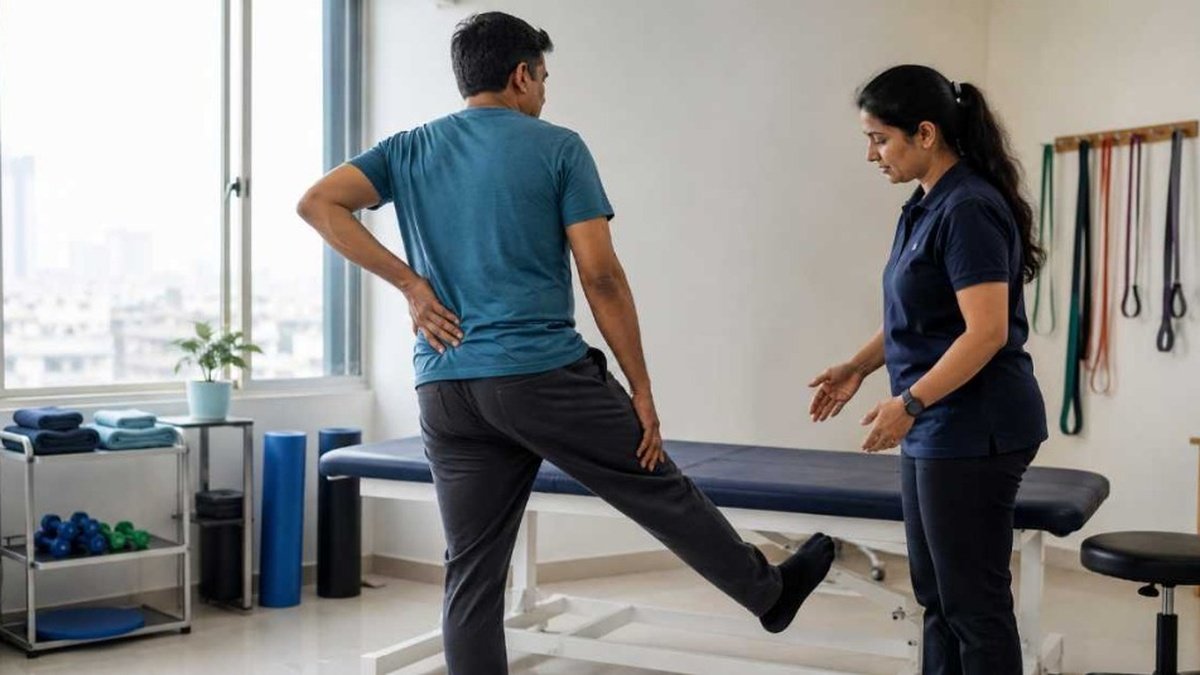
Diagnosis typically starts with a clinical history and physical examination, including tests such as the straight leg raise, which checks whether lifting the leg reproduces sciatic-type pain, and an assessment of reflexes, strength, and sensation to identify which nerve root may be involved. Imaging is not always necessary in the first few weeks, since most disc-related pain improves with conservative care regardless of what the scan shows. An MRI is usually reserved for cases where symptoms are severe, worsening, associated with red flag signs, or have not improved after six or more weeks of conservative treatment, or when surgery is being considered.
How Physiotherapy Treats a Slip Disc
Physiotherapy for a slip disc is not a single exercise or a single session; it is a staged programme that changes as your symptoms improve. A physiotherapist will typically assess your specific pain pattern, identify which movements ease or worsen your symptoms, and build a plan around that response rather than applying a generic routine.
Phase 1: Calming the Pain (Days 1-14)
In the early, most painful phase, the goal is to reduce nerve irritation and muscle spasm without letting you become inactive. This may include gentle pain-relief positioning, short walks, activity modification, and hands-on techniques such as soft tissue release or joint mobilisation. Complete bed rest is generally discouraged beyond a day or two, since prolonged inactivity is linked to slower recovery and increased stiffness.
Phase 2: Restoring Movement
Once acute pain settles, treatment shifts toward restoring pain-free range of motion. Many physiotherapists use a McKenzie method approach, which involves repeated directional movements, most often gentle spinal extension, to help "centralise" pain, meaning the pain moves from the leg or arm back toward the centre of the spine. Centralisation is generally considered a positive sign that the nerve is less irritated.
Phase 3: Building Strength and Stability
As pain continues to settle, the focus moves to core stabilisation, postural retraining, and graded strengthening of the muscles that support the spine, particularly the deep abdominal and lower back muscles. This phase is what protects against re-injury and is often the longest part of the programme.
Manual Therapy and Supporting Modalities
Alongside exercise, physiotherapists may use manual therapy such as spinal mobilisation and nerve gliding techniques, and modalities such as heat, cold, or electrical stimulation to manage pain and muscle spasm in the short term. These passive treatments are generally used to support an active exercise programme rather than replace it, since long-term outcomes are driven mainly by movement and strengthening.
Safe Slip Disc Exercises
The exercises below are commonly used in slip disc rehabilitation, but they should be introduced gradually and stopped immediately if they increase leg or arm symptoms. A physiotherapist should confirm which movements are appropriate for your specific disc level and symptom pattern before you begin.
| Exercise | Purpose | How Often |
|---|---|---|
| Prone press-up / McKenzie extension | Encourages the disc bulge to centralise, easing leg or arm pain | 5-10 reps, several times a day |
| Standing extension | A gentler alternative to the press-up for early-stage pain | 5-10 reps, several times a day |
| Nerve glides (sciatic or median nerve) | Improves nerve mobility and reduces tingling or numbness | 1-2 sets of 10, once or twice daily |
| Pelvic tilts | Gently activates deep core muscles without loading the disc | 2 sets of 10 |
| Bird-dog | Builds core and back stability without spinal flexion | 2-3 sets of 8-10 per side |
| Bridging | Strengthens glutes and lower back support muscles | 2-3 sets of 10-12 |
| Walking | Low-impact activity that promotes circulation and disc nutrition | 10-30 minutes daily, as tolerated |
General rules for all slip disc exercises: move slowly and within a pain-free range, stop if pain travels further down the leg or arm, and avoid pushing through sharp or electric-shock-like pain. Mild, local discomfort that settles quickly is generally acceptable; pain that spreads or worsens is a signal to stop and check in with your physiotherapist.
Mistakes That Slow Recovery
- Staying in bed too long. Extended rest weakens supporting muscles and can prolong recovery.
- Returning to heavy lifting or high-impact exercise too soon, before core strength has been rebuilt.
- Ignoring posture during sitting, especially prolonged slouched sitting, which increases disc pressure.
- Ping-ponging between complete inactivity and overexertion instead of following a graded programme.
- Skipping the strengthening phase once pain eases, which increases the risk of the disc problem recurring.
- Self-prescribing exercises from generic videos without matching them to your specific pain pattern.
Physiotherapy vs Surgery
Large studies comparing surgery to conservative care, including physical therapy, have found that while surgery can offer faster short-term relief for some patients, long-term outcomes at one to two years are often comparable between the two approaches. This is why major spine and neurosurgical guidelines generally recommend a structured course of conservative treatment, including physiotherapy, as the first-line approach for most people without severe or progressive neurological deficits.
| Factor | Physiotherapy | Surgery |
|---|---|---|
| Typical first step | Yes, for most non-emergency cases | Usually only after conservative care fails or with red flag symptoms |
| Recovery time | Weeks to a few months | Faster initial pain relief, but longer post-operative rehabilitation |
| Risk profile | Low risk; mainly requires consistency | Surgical risks including infection, nerve injury, and anaesthesia risk |
| Long-term outcome | Comparable to surgery in many studies at 1-2 years | Comparable to physiotherapy in many studies at 1-2 years |
| Best suited for | Most disc herniations without severe neurological loss | Cauda equina syndrome, progressive weakness, or failed conservative care |
The decision between the two should always be made with a doctor or spine specialist based on your imaging, neurological examination, and how you have responded to conservative treatment, rather than by physiotherapy outcomes alone.
Recovery Timeline
Recovery speed varies by individual, but many patients following a structured physiotherapy programme notice meaningful improvement within four to eight weeks. A general pattern looks like this:
- Week 1-2: Focus on pain control, gentle movement, and avoiding aggravating positions.
- Week 2-6: Gradual return of range of motion, introduction of directional exercises such as extension work, and light functional activity.
- Week 6-12: Progressive core and postural strengthening, return to most daily activities.
- 3-6 months: Return to sport or physically demanding work, with ongoing maintenance exercise.
If there is no meaningful improvement after six weeks of consistent, well-supervised physiotherapy, or if symptoms are worsening rather than settling, it is reasonable to revisit your doctor to discuss imaging or further options.
Preventing Recurrence
- Continue core and back strengthening exercises even after pain resolves
- Practice safe lifting technique: bend at the hips and knees, keep the load close, avoid twisting while lifting
- Break up long periods of sitting with short movement breaks every 30-45 minutes
- Maintain a healthy body weight to reduce sustained load on the lower back
- Set up an ergonomic workstation with adequate lumbar support
- Stay physically active with low-impact activities such as walking or swimming
Frequently Asked Questions
What is a slip disc?
A slip disc is a common term for a herniated or bulging spinal disc, where the soft inner material pushes through the outer layer and can press on a nearby nerve, causing pain, numbness, or weakness.
Can physiotherapy fix a slipped disc?
Physiotherapy cannot always physically reverse a disc herniation, but it is highly effective at relieving pressure on the nerve, reducing pain, and restoring function, and it is the recommended first-line treatment for most people. Some smaller disc herniations can also shrink naturally over time.
How long does it take to recover from a slip disc with physiotherapy?
Many people notice significant improvement within four to eight weeks of consistent physiotherapy, though full strengthening and return to demanding activity can take three to six months.
What exercises should I avoid with a slipped disc?
Avoid high-impact activity, heavy lifting, deep forward bending or flexion-loaded movements, and any exercise that causes pain to travel further into the leg or arm, until a physiotherapist confirms you are ready to progress.
Is walking good for a slip disc?
Yes. Gentle, regular walking is generally recommended from the early stages of recovery, as it promotes circulation and disc nutrition without placing heavy load on the spine.
When should a slipped disc be treated with surgery instead of physiotherapy?
Surgery is generally considered when there are red flag symptoms such as cauda equina syndrome, progressive or severe neurological weakness, or when symptoms have not improved after a genuine trial of conservative treatment, typically six weeks or more.
What are the warning signs of a serious slip disc emergency?
Saddle numbness, loss of bladder or bowel control, sudden severe weakness in both legs, or new sexual dysfunction are red flag signs of cauda equina syndrome and require immediate emergency care.
Can a slipped disc heal on its own?
Many disc herniations improve over weeks to months with conservative management, and some disc material can be naturally reabsorbed by the body over time, though staying completely inactive is not recommended during this process.
Is bed rest good for a slip disc?
Short periods of rest can help during the most acute pain, but prolonged bed rest is generally discouraged, since it weakens supporting muscles and is associated with slower recovery than staying gently active.
How many physiotherapy sessions are needed for a slip disc?
This varies by severity and response to treatment, so it is best confirmed with your treating physiotherapist based on your specific progress rather than a fixed number.
Next Steps
If you suspect a slip disc, start by ruling out red flag symptoms, then see a doctor or physiotherapist for an accurate assessment rather than guessing which exercises to try. A tailored physiotherapy programme, built around your specific pain pattern and progressed in stages, gives most people the best chance of returning to normal activity without surgery.