We provide comprehensive, early intervention programs for children with Down Syndrome, focusing on physical, cognitive, and social development to help them achieve their full potential.
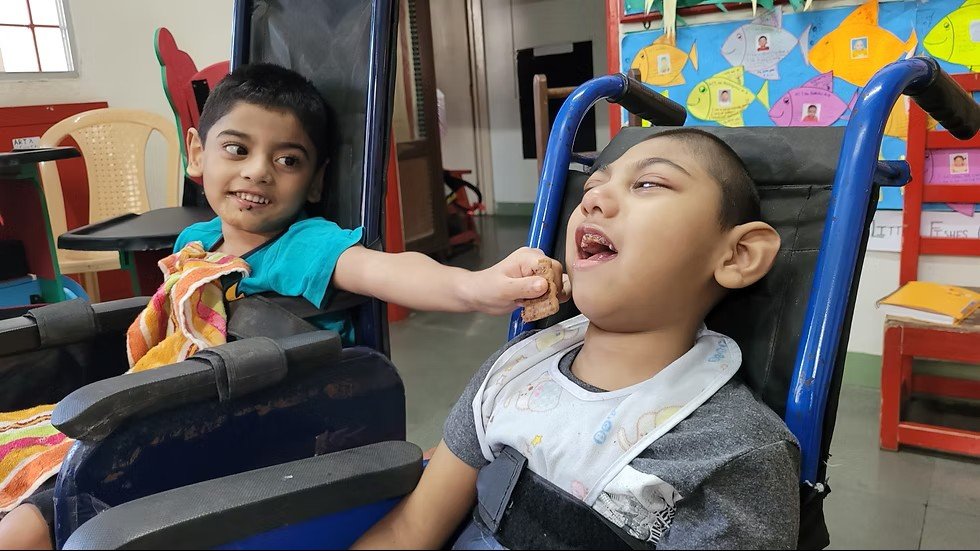
Down syndrome is a genetic condition that causes some level of learning disability and characteristic physical features. While it is a lifelong condition, early intervention with a team of therapists can significantly improve a child's development. At Sajjad Rehabilitation, our multidisciplinary team of physiotherapists, occupational therapists, and speech therapists works together to create a holistic plan. That plan supports every aspect of your child's growth.
We assess posture, low muscle tone, balance, coordination, hand use, communication, and how the child manages play and daily routine at the present stage.
Therapy is planned to build strength, body control, daily independence, and learning readiness while also giving families practical home guidance they can follow consistently.
We first identify what is limiting daily function most clearly so the therapy plan starts at the right point.
Sessions focus on participation, movement, tolerance, independence, and function that matter in real life.
Parents get simple carry-over activities and routine guidance so progress continues outside the clinic too.
Our Down syndrome therapy follows a structured, multi-phase approach to support strength, coordination, independence, and steady developmental progress.
We check posture, low tone, balance, hand use, and daily developmental needs.
Goals are set around movement, independence, communication, and participation.
Sessions build strength, coordination, daily skills, and learning readiness.
Families receive practical carry-over strategies to support progress between visits.
The therapy plan is updated regularly according to the child's present stage.
Therapy can help the child take part more comfortably in routine, play, movement, and age-appropriate activities.
Steady follow-up often improves how skills are used in real situations instead of only during one session.
Parents get clarity on what to do at home, what to repeat, and what to monitor between reviews.
Regular therapy review helps keep support realistic, useful, and aligned with the child's current needs.
We keep down syndrome rehabilitation practical, structured, and focused on progress that makes day-to-day life more manageable for the child and family.
Get a professional evaluation and a therapy plan matched to your child's present support needs.
An assessment is useful when down syndrome is affecting movement, attention, communication, participation, comfort, or daily routine in a way that is becoming hard to manage at home or school.
The first visit usually includes parent discussion, review of current difficulties, observation of function, and planning goals around the child's present daily needs.
Therapy cannot remove the diagnosis itself, but it can help improve function, participation, comfort, confidence, and daily routine support when the plan is structured and followed consistently.
Not always. The therapy mix depends on the child's age, current tolerance, diagnosis, and the main daily difficulty that needs attention first.
Parents are usually guided on simple home activities, routine adjustments, handling tips, or practice tasks that match the child's current goals.
Progress depends on the condition, age, therapy frequency, home consistency, and current functional level. Some changes appear early, while bigger gains may need steady follow-up.