

Communication
Children with social and communication difficulty
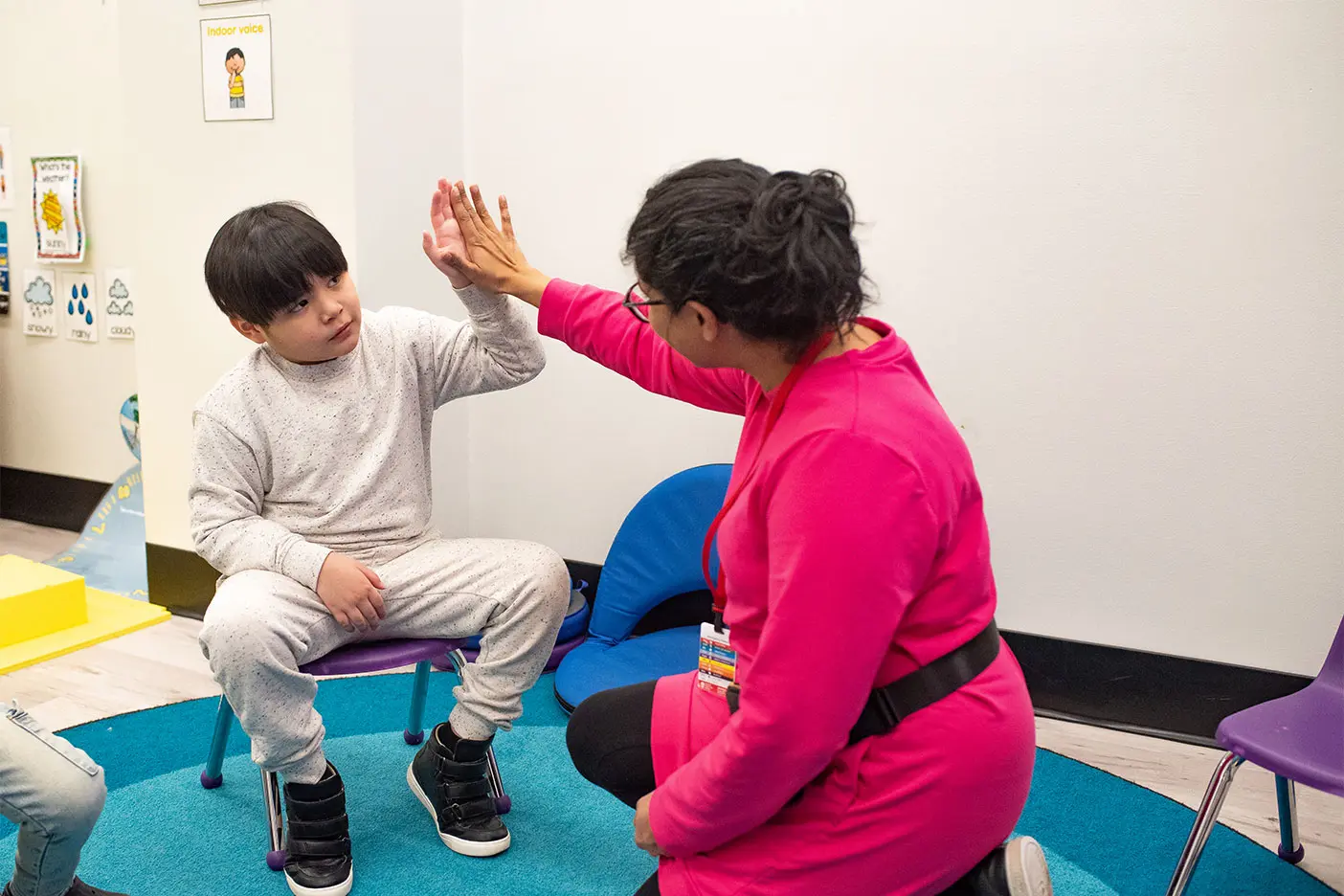
For children who struggle with eye contact, joint attention, expressive communication, interaction, or following social routines.
Every child deserves the chance to thrive. Sajjad Rehabilitation provides specialized home-based therapy for children with Autism Spectrum Disorder (ASD). Our certified therapists deliver behavioral, sensory, and speech therapy in the comfort and safety of your home.

Home autism support is most useful when a child needs help with communication, behavior regulation, sensory needs, routine building, or everyday participation in a calmer and more familiar environment.It works best when therapy has to connect directly with the child's home routine, family involvement, and the situations where challenges actually happen every day.
For children who struggle with eye contact, joint attention, expressive communication, interaction, or following social routines.
For meltdowns, avoidance, restlessness, sensory seeking, poor tolerance, or difficulty staying regulated through the day.
For play, sitting tolerance, transitions, self-care, learning readiness, and daily routines that need more structure.

For parents who need clear ways to handle behavior, improve cooperation, and continue therapeutic support between visits.
Structured strategies to improve cooperation, sitting tolerance, transitions, and behavior patterns that interrupt daily routine.
Activities planned to improve body awareness, sensory processing, tolerance, focus, and calmer participation in everyday tasks.
Support for attention, imitation, interaction, language stimulation, and meaningful communication during daily routines.
Practical guidance so families can continue routines, prompts, behavior strategies, and communication support outside sessions.
Work on feeding, dressing, toileting readiness, table tasks, routine participation, and self-help skill development.
Coordination across behavior, speech, occupational therapy, and broader developmental goals when the child needs multiple supports.
Home autism support that is structured, child-aware, family-guided, and built around the child's real routine.
Every visit follows a clear care plan so treatment stays structured and purposeful.
Patients are matched with trained therapists and care staff based on their needs.
Families stay informed so home care is easier to follow and continue between visits.
Regular follow-up helps patients continue recovery with less disruption and better consistency.
Care is delivered with practical safety, hygiene, and attention to patient comfort during each visit.
Home appointments are planned around patient needs so therapy becomes easier to continue regularly.
Patients can continue therapy in a familiar environment that reduces stress and supports better cooperation.
Our home autism support services are expanding to help children and families who need communication work, sensory regulation, behavior guidance, and better everyday participation at home.
We are expanding our home autism support network across India.
Yes. That is one of the biggest reasons families prefer home sessions. A familiar environment often reduces sensory overload and resistance, making it easier to work on communication, routines, and behavior in a space where the child is more settled.
Many children benefit from combined goals rather than a single isolated therapy. Depending on the child's profile, communication, sensory regulation, daily living skills, and behavior strategies may all need to be addressed together in a coordinated plan.
Yes. Early sessions may begin with engagement, regulation, imitation, sensory routines, parent coaching, and simple communication building instead of formal table tasks. Home-based work can be adapted to the child's starting point.
Parent involvement matters a lot because progress usually depends on what continues between visits. Therapists can guide, but routines, prompts, behavior support, and communication opportunities inside daily life need family participation too.
That depends on the child's needs, regulation level, attention, and overall plan. Some children benefit from multiple sessions a week, while others progress with a balanced schedule plus strong parent carryover between visits.
If there are major sleep issues, seizures, significant feeding concerns, strong regression, severe self-injury, or broader developmental concerns that have not been medically assessed, therapy should run alongside appropriate medical or developmental review rather than replacing it.