
Speech Delay
Children with delayed speech and language
For late talking, unclear speech, weak vocabulary, poor sentence use, or difficulty following and expressing language.
Communication is key to life. Sajjad Rehabilitation brings certified Speech-Language Pathologists (SLP) to your home. Whether it's a child with speech delay, stammering issues, or an adult recovering from stroke-induced aphasia, we provide personalized therapy in the comfort of your home.
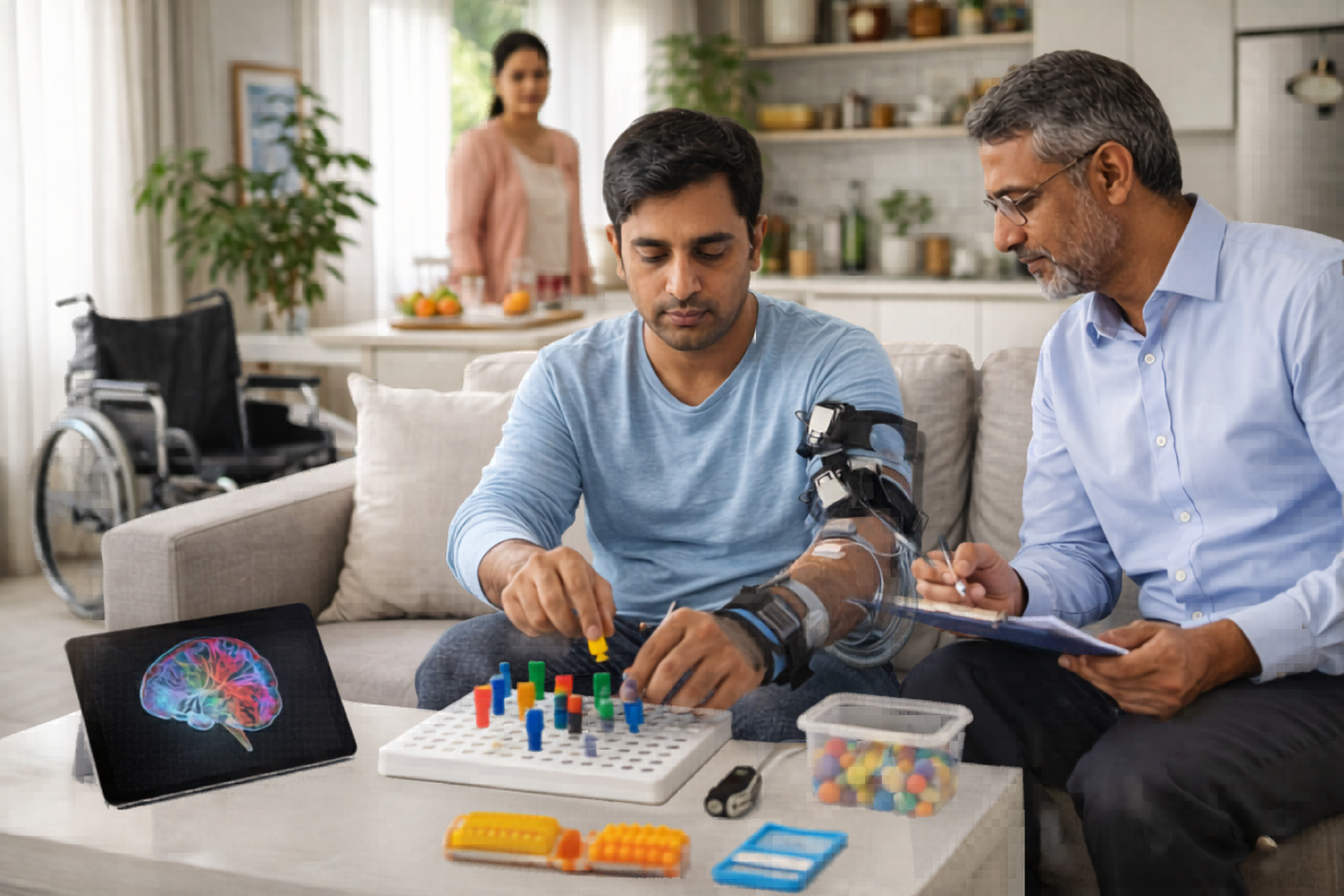
Home speech therapy is most useful when speaking, language, fluency, voice, or swallowing issues are affecting daily communication and regular clinic travel is difficult or stressful.It works especially well when therapy needs to fit into the patient's real speaking environment, family routine, and everyday communication challenges.
For late talking, unclear speech, weak vocabulary, poor sentence use, or difficulty following and expressing language.
For aphasia, word-finding difficulty, unclear speech, and communication problems after neurological recovery.

For repetitions, blocks, speaking anxiety, and fluency issues that affect school, work, or public speaking.

For dysphagia, food-pocketing, choking risk, and swallowing weakness linked to age or neurological conditions.
Targeted work for unclear sounds, poor pronunciation, distorted speech, and better day-to-day speech clarity.
Activities that build vocabulary, sentence use, understanding, and expressive communication in children with delays.
Guided techniques for smoother speech, easier breathing patterns, and more confidence during speaking situations.
Speech and language support after stroke or brain injury to improve speaking, understanding, reading, and communication.
Care for weak voice, strained voice, hoarseness, and better speaking effort during conversation and daily use.
Exercises and guided routines that support safer swallowing, better oral control, and reduced mealtime difficulty.
Structured home speech therapy with family guidance, real-life practice, and communication goals that fit daily life.
Every visit follows a clear care plan so treatment stays structured and purposeful.
Patients are matched with trained therapists and care staff based on their needs.
Families stay informed so home care is easier to follow and continue between visits.
Regular follow-up helps patients continue recovery with less disruption and better consistency.
Care is delivered with practical safety, hygiene, and attention to patient comfort during each visit.
Home appointments are planned around patient needs so therapy becomes easier to continue regularly.
Patients can continue therapy in a familiar environment that reduces stress and supports better cooperation.
Our home speech therapy services are expanding to support children, adults, and families who need language development, speech clarity, fluency work, and safer communication support at home.
We are expanding our home speech therapy network across India.
If the child is not using age-appropriate words, struggles to understand simple language, speaks very little, is hard to understand, or is falling behind in communication compared with peers, an assessment is usually better than waiting too long and hoping it will correct itself.
Yes, it can help both. Many adults need home speech therapy after stroke, brain injury, Parkinsonism, or other neurological conditions that affect speech, language, voice, or swallowing. Home sessions can be especially helpful when travel is difficult.
Yes. Fluency problems often change depending on stress, speed, and speaking situation. Home sessions can still build control, confidence, and practice strategies that later carry over into school, work, phone calls, and public speaking.
For children, that usually helps a lot because parents learn how to continue prompts, language routines, and communication support between visits. Even for adults, family understanding often improves daily carryover.
If there is repeated choking, coughing during meals, food getting stuck, unexplained weight loss, fever after swallowing issues, or clear breathing difficulty while eating, medical review should not be delayed. Swallowing therapy helps best after proper assessment.
That depends on the diagnosis, severity, age, consistency, and home follow-through. Some patients show early changes in attention, sound practice, or mealtime safety, while clear language or speech gains often need repeated sessions and regular practice over time.