At Sajjad Rehabilitation & Therapy Centre in Patna, we support people who have trouble speaking, understanding, reading, or writing after stroke or brain injury. Therapy is planned to improve daily communication in a simple and practical way.
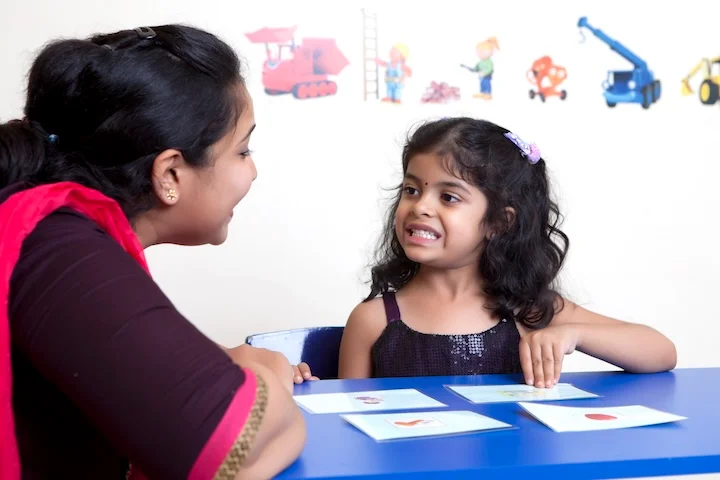
The person may know what they want to say but cannot quickly find the right word.
Some people with aphasia find spoken words, questions, or long sentences difficult to understand.
Speech may come out in short effortful phrases instead of smooth full sentences.
The person may say the wrong word, mix words, or use words that do not match the message.
Aphasia can make it hard to read simple words, write messages, or fill basic forms.
Daily talking can feel slow, tiring, and stressful when messages do not come out clearly.
We check speaking, understanding, naming, reading, writing, and day-to-day communication. Then we build a plan around the person's needs, recovery stage, and real-life goals.
Therapy may focus on rebuilding language, practicing useful words and phrases, and teaching other ways to communicate when speech is hard. Family support is also included because daily communication happens beyond the clinic.
Therapy works on speech, understanding, word finding, and other language skills affected by aphasia.
We teach ways to share messages with gestures, key words, writing, drawing, or communication cues when needed.
Sessions target daily conversations, needs, routines, and family communication instead of isolated drills only.
We assess speaking, understanding, reading, writing, and daily communication difficulty.
Therapy begins with useful words, simple tasks, and the main language problems affecting daily life.
The person practices naming, comprehension, conversation, and message sharing in real situations.
Family learns how to support better communication during meals, routines, and conversation at home.
Starting therapy early can support communication recovery during an important period after stroke or brain injury.
Early treatment can make basic talking, understanding, and message sharing easier in daily routines.
Clearer communication and better strategies can lower stress for both the person and family members.
Family can learn better ways to support communication instead of guessing, rushing, or speaking over the person.
We keep aphasia therapy practical, respectful, and focused on communication that matters in daily life after stroke or brain injury.
Get a clear communication evaluation and a therapy plan that matches stroke or brain injury recovery needs.
Aphasia is a language problem caused by damage to the language areas of the brain, often after a stroke. It can affect speaking, understanding, reading, and writing.
Yes. Speech therapy can help many people with aphasia improve communication, practice lost language skills, and learn other ways to share messages when speech is hard.
No. Aphasia affects access to language, not intelligence. The person may know what they want to say but still struggle to find or understand words.
Aphasia can affect language in different ways. Some people understand better than they speak, while others speak more fluently but have trouble understanding spoken words.
Recovery time is different for each person. Improvement may happen faster in the early months, but many people continue to improve over a longer time with regular therapy and practice.
Yes. Family members can help by speaking clearly, using short adult sentences, giving extra time, reducing distractions, and supporting the communication strategies taught in therapy.