
Ankle SprainPhysiotherapy
At Sajjad Rehabilitation & Therapy Centre in Patna, we provide structured physiotherapy for Grade 1, 2, and 3 ankle sprains. Our goal is to reduce swelling, improve ankle stability, and help you return safely to walking, stairs, exercise, and sport.
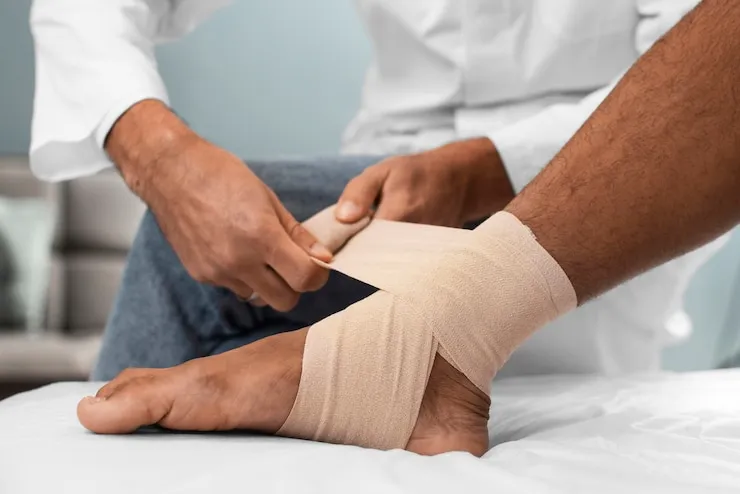
Common Symptoms of Ankle Sprain
Pain while walking
You may feel pain when standing, walking, or putting weight on the ankle after twisting it.
Swelling around the ankle
The ankle may become swollen soon after the injury and may stay puffy for some time.
Bruising
Blue, purple, or dark marks around the ankle and foot can happen after the ligament is stretched or torn.
Stiff ankle movement
The ankle can feel tight and hard to move, especially after rest or in the early healing stage.
Weak or unstable feeling
Many people feel like the ankle may give way, especially on stairs, uneven ground, or quick turns.
Difficulty bearing weight
A more serious sprain can make normal walking hard and may cause limping or fear of loading the foot.
Physiotherapy Treatment Approach
An ankle sprain is not only about rest. We check pain, swelling, stiffness, balance, and how stable the ankle feels during walking and daily movement.
Then we build a step-by-step plan to calm the ankle, improve movement, rebuild support, and prepare you for safe return to exercise, sport, and uneven ground.
Calm pain and swelling
Early treatment helps settle the ankle so normal walking and movement become easier.
Restore motion and control
We improve ankle movement, strength, and balance so the joint feels more steady.
Return step by step
You progress from basic rehab to running, jumping, or sport only when the ankle is ready.
Rehabilitation & Recovery Timeline
First 3 days
Protect the ankle, control swelling, and reduce pain.
Week 1-2
Improve movement and start safer weight-bearing as tolerated.
Week 2-6
Build ankle strength, balance, and confidence during walking.
Week 6+
Return to running, sport, or harder activity with proper progression.
Importance of Early Treatment
Swelling settles sooner
Early care can help bring swelling down before it affects walking and daily movement more.
Less stiffness
Safe exercises started at the right time can stop the ankle from becoming too tight.
Better ankle stability
Rehab improves the support muscles and balance system that protect the ankle.
Lower re-sprain risk
Good early rehab can reduce the chance of the ankle twisting again later.
Why Choose Sajjad Rehabilitation
We focus on ankle rehab that improves stability, confidence, and safer return to normal activity.
- Detailed Assessment: We check pain, swelling, movement, weakness, and ankle instability carefully.
- Grade-Specific Rehab: Your plan is matched to mild, moderate, or more severe ankle sprain needs.
- Balance and Strength Training: We work on the control that helps stop repeat sprains.
- Step-by-Step Progression: You move from walking rehab to higher activity safely.
- Return-to-Sport Support: We guide recovery for daily life, exercise, and sports confidence.
Book an Assessment
Get a professional evaluation and a personalized ankle rehab plan.
Frequentily asked question
Some people can walk a little, but walking with a lot of pain or limping can make things worse. Early support, swelling control, and guided rehab can help you return to normal walking more safely.
Physiotherapy is often helpful if you still have pain, swelling, stiffness, weakness, or a feeling that the ankle may give way. Rehab works on movement, strength, balance, and safer return to activity.
Swelling can stay for some time after an ankle sprain, especially if the injury was more severe or the ankle is being overloaded too early. Rehab helps manage swelling while improving movement and support.
Return should depend on pain, swelling, balance, strength, and how well the ankle handles hopping, landing, and direction change. A step-by-step return is safer than going back only by time.
Ice is usually more helpful in the early stage to reduce pain and swelling. Heat may be used later in some cases when stiffness is the main problem, but early swelling usually needs a different approach.
You should get checked if you cannot bear weight, pain is very severe, there is a lot of swelling or bruising, the ankle looks deformed, or symptoms are not improving. A fracture may need to be ruled out.