
Best Autism Doctor in Patna: A Parent's Guide to Finding the Right Specialist
Your child is growing, but something about their development has been worrying you. Perhaps they are not speaking as much as expected. They may find it difficult to tell you what they want, become upset by certain sounds, or prefer activities that other children their age do not seem as interested in.
You ask a family member, and they suggest waiting another year. Someone else recommends speech therapy. A neighbour tells you to visit a child specialist.
With so much different advice, knowing where to begin can be difficult.
Many parents facing similar concerns start searching online for the best autism doctor in Patna. What they often need first, however, is someone qualified who can listen to their concerns, assess their child's development, and explain what to do next.
Understanding which specialist to consult can save families from unnecessary confusion and help children receive appropriate support when they need it.
This guide explains what parents should know before booking an autism assessment in Patna, from recognising developmental concerns to choosing a suitable professional and understanding the support available afterwards.
Understanding Autism Beyond the Common Misconceptions
Autism, or Autism Spectrum Disorder (ASD), is a neurodevelopmental condition. In simple terms, it means a person's brain develops and processes information differently, which can affect communication, social interaction, behaviour, and sensory experiences.
Autism does not look the same in every child.
One child may use very few spoken words but communicate well through gestures or pictures. Another may speak fluently yet find conversations or certain social situations difficult. Some children enjoy predictable routines, while others have strong reactions to loud sounds, particular fabrics, or unfamiliar surroundings.
These differences are part of why autism is described as a spectrum.
Parents sometimes worry that they have done something wrong or that their parenting has caused their child's developmental difficulties. Autism is not caused by poor parenting.
It is also not something that can be judged simply by looking at a child. Understanding their development requires careful observation, an appropriate assessment, and consideration of their individual history.
Which Doctor Should You Visit for Autism in Patna?
Searching for an autism doctor can bring up several types of specialists. You may see paediatricians, developmental paediatricians, psychiatrists, neurologists, and psychologists listed in your search results.
They do not all perform the same role.
For parents who have never visited a developmental specialist before, understanding the difference is a useful starting point.
Start With a Paediatrician
If you have noticed changes or delays in your child's development, your regular paediatrician is often a sensible first point of contact.
You can explain what you have observed at home, whether it involves speech, communication, movement, social interaction, or everyday behaviour.
A paediatrician can review your child's development, consider other possible health concerns, carry out developmental screening where appropriate, and advise whether a specialist assessment is needed.
You do not need to identify the exact condition yourself before making an appointment.
Developmental Paediatrician
A developmental paediatrician has specialised training in children's development and developmental conditions.
They assess areas such as communication, learning, social interaction, movement, and developmental milestones.
If autism or another developmental condition is suspected, a developmental paediatrician may carry out or coordinate a more detailed evaluation.
When looking for a child development specialist in Patna, check the doctor's qualifications and whether autism assessment is among the services they provide.
Child Psychiatrist
A child psychiatrist is a medical doctor who specialises in children's mental health and related developmental conditions.
They may be involved in evaluating autism, particularly when a child also experiences significant anxiety, attention difficulties, sleep concerns, or other conditions requiring specialist medical care.
Not every autistic child requires psychiatric medication. Treatment decisions should always be based on an individual assessment.
Child Neurologist
Some children may need evaluation by a paediatric neurologist, particularly if there are additional concerns involving seizures, loss of previously acquired skills, or unusual neurological findings.
However, visiting a neurologist is not automatically necessary for every child who may be autistic.
Your paediatrician or developmental specialist can help determine whether a neurological consultation is appropriate.
Clinical Psychologist
A suitably qualified clinical psychologist may also be involved in assessing a child's development, behaviour, communication, and learning abilities.
In India, parents should check the professional's relevant qualifications and registration requirements, where applicable.
Autism assessment may involve several professionals working together rather than one person making every decision independently.
The main point: Do not select a doctor simply because their website describes them as the best autism specialist in Patna. Look at their qualifications, assessment experience, and ability to explain your child's needs clearly.
Signs That May Be Worth Discussing With a Specialist
Children learn at different speeds. One may start speaking earlier, while another takes more time. Some enjoy meeting new people; others feel more comfortable in familiar surroundings.
A developmental difference does not automatically mean autism.
Still, there are certain signs that parents should not ignore, particularly when several appear together or continue over time.
You may notice that your child:
-
Rarely responds when their name is called.
-
Has difficulty using words or gestures to express their needs.
-
Does not often point to things to share an interest.
-
Finds back-and-forth interaction difficult.
-
Repeats particular movements, sounds, or activities.
-
Becomes very distressed when a familiar routine changes.
-
Reacts strongly to certain sounds, lights, textures, or touch.
-
Shows differences in how they play or interact with other children.
-
Has lost language or social skills they previously used.
These signs can have different explanations. Hearing difficulties, language disorders, and other developmental conditions may sometimes involve similar concerns.
For this reason, avoid trying to diagnose your child through internet videos or symptom checklists alone.
If you notice persistent developmental concerns, arrange a professional assessment. A loss of previously acquired skills should be discussed with a doctor promptly.
What Actually Happens During an Autism Assessment?
One concern parents often have before their first appointment is whether their child will have to undergo complicated medical tests.
An autism assessment usually involves understanding the child's developmental history, observing their behaviour and communication, and considering information from parents or caregivers.
The process may require more than one appointment.
The First Conversation Matters
The doctor will usually begin by asking about your child's development.
You may be asked when your child started walking, how they communicate, whether they use gestures, what activities they enjoy, and whether you have noticed any changes in their behaviour.
The doctor may also ask about birth history, previous illnesses, family history, school experiences, and any assessments already completed.
There are no perfect answers to these questions.
If you cannot remember exactly when a milestone occurred, say so. What matters is giving the professional an accurate picture of your child's everyday development.
Observing How Your Child Communicates and Plays
The specialist may interact with your child through play, conversation, or simple activities suited to their age and developmental level.
They may observe how the child communicates, responds to others, shares interests, and engages with activities.
Parents may also be asked to complete developmental questionnaires.
These observations help professionals understand the child's strengths and support needs.
Screening Is Not the Same as Diagnosis
A developmental screening tool can indicate whether a child needs further assessment. It cannot, by itself, confirm autism.
A formal evaluation considers the child's developmental history and recognised diagnostic criteria.
There is no single routine blood test or brain scan that can independently diagnose autism.
Depending on the child's needs, the professional may recommend a hearing assessment, speech and language evaluation, psychological assessment, or other relevant investigations.
After the evaluation, parents should have an opportunity to discuss the findings and understand any recommended next steps.
Finding the Right Autism Specialist in Patna
A Google search may show several doctors and clinics, but online visibility alone does not tell you whether a specialist is suitable for your child.
It helps to consider a few practical things before booking.
Look beyond ratings and advertisements. Check the doctor's actual qualifications, relevant experience, and whether they offer developmental assessments. A general medical qualification does not automatically mean someone has specialist training in autism diagnosis.
Choose someone who takes your concerns seriously. Parents observe their children in situations that a doctor may not see during a short appointment. A good assessment should take those everyday observations into account.
Understand what you are booking. An initial consultation, developmental screening, and comprehensive autism assessment may be separate services. Ask the clinic what is included and whether additional appointments are likely to be required.
Consider travel and follow-up visits. For families living in Kankarbagh, Hanuman Nagar, Rajendra Nagar, Boring Road, Danapur, or other parts of Patna, reaching the clinic may also influence the decision. A convenient location can be helpful, but professional suitability should come first.
Ask about charges beforehand. Find out whether assessment fees, follow-up consultations, and any additional evaluations are charged separately.
There is no need to rush into a decision because someone promises fast results. A qualified professional should be willing to explain the assessment process without guaranteeing a particular outcome.
Preparing for Your Child's First Appointment
You do not need to prepare an extensive medical file before visiting a child specialist. However, a few simple things can make the consultation easier.
If your child has previously visited another doctor, carry the relevant prescriptions and medical reports. Hearing test results, developmental assessments, school feedback, and previous therapy records may also be helpful.
Before the appointment, write down the concerns you most want to discuss.
For example, perhaps your child communicates comfortably at home but struggles to express themselves at school. Maybe certain sounds cause distress, or you have noticed that they are no longer using words they spoke earlier.
These observations can be more useful than trying to describe your child only through broad labels such as shy, stubborn, or hyperactive.
You can also ask the doctor whether short videos of specific everyday situations would be helpful.
If your child finds unfamiliar places difficult, carrying a favourite toy or another comforting item may make the visit easier.
After the Assessment: Understanding Your Child's Support Needs
An autism diagnosis does not tell parents everything about what their child will or will not be able to do in the future.
It can, however, provide a clearer understanding of their developmental profile and help professionals recommend appropriate support.
Some children need help with communication. Others may benefit from assistance with everyday activities, emotional regulation, movement, learning, or participation at school.
A support plan should reflect those individual needs rather than placing every child into the same therapy programme.
Speech and Language Therapy
Speech and language therapy is not limited to teaching children how to pronounce words.
A therapist may help a child understand language, express their needs, participate in communication, or use other methods such as gestures, pictures, or communication devices.
For example, a child who finds it difficult to ask for food, water, or a favourite toy may benefit from learning a communication method that works for them.
Occupational Therapy
Everyday tasks that appear simple to adults can be difficult for some children.
Dressing, eating, participating in classroom activities, using certain objects, or coping with particular sensory experiences may require additional support.
Occupational therapy can help children develop practical skills and assist families in making daily routines more manageable.
Developmental and Behavioural Support
Developmental interventions can help children build communication, play, learning, and everyday participation skills.
Support should be respectful and suited to the child's needs. The goal should not be to force a child to hide harmless autistic characteristics or behave exactly like other children.
Families should understand why a particular intervention has been recommended and how its goals will be reviewed.
Special Education and School Support
Some autistic children attend mainstream schools, while others need additional educational support or a different learning environment.
A special educator may help develop an individual learning plan and recommend suitable classroom adjustments.
The right choice depends on the child, their learning needs, and the support available.
Physiotherapy When Needed
Physiotherapy is not a routine requirement for every autistic child.
It may be useful when a child has additional difficulties with balance, coordination, posture, movement, or motor development.
A relevant professional assessment can help determine whether physiotherapy is appropriate.
Autism Therapy and Child Development Support at Sajjad Rehab, Patna
For many families, receiving advice from a specialist is only one part of the process. The next concern is finding appropriate support close enough to attend appointments and maintain communication with professionals.
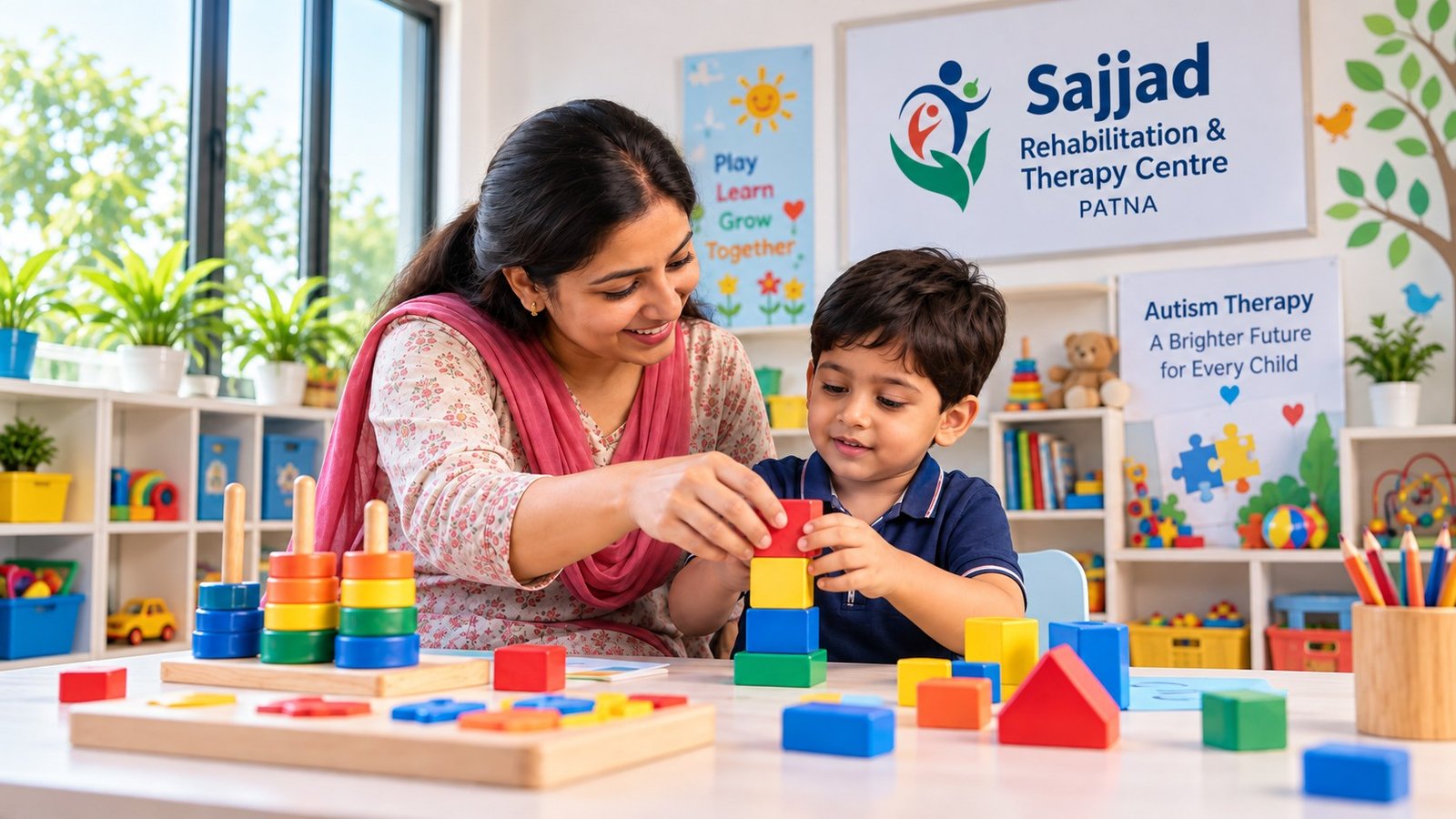
Sajjad Rehabilitation & Therapy Centre, located in Hanuman Nagar, Patna, is a local rehabilitation centre that families can contact to enquire about its developmental and therapy services.
Parents exploring available services can read more about autism therapy support in Patna through the centre's website.
You can also explore its child rehabilitation services for information about developmental and functional support.
If your child has already undergone an assessment, sharing the available reports and professional recommendations can help you explain the type of support you are seeking.
It is worth remembering that medical diagnosis and rehabilitation therapy are different services. A rehabilitation centre should not be treated as a substitute for an appropriately qualified autism diagnostic specialist unless the relevant professional assessment service is confirmed.
Before booking, ask about the availability of suitable professionals, their qualifications, the assessment or intake process, and the proposed therapy arrangements.
The aim should be to find support that makes sense for your child, not simply to enrol them in as many sessions as possible.
What Parents Can Do at Home
Parents often ask themselves whether they are doing enough for their child's development.
It is understandable to want to help, but home life does not need to become a continuous series of therapy exercises.
Ordinary activities can provide useful opportunities to communicate and learn.
If your child enjoys arranging blocks, sit beside them and take part in the activity. If they like picture books, spend a little time looking through one together. If they communicate through gestures rather than words, acknowledge what they are trying to express.
Give your child time to respond. Some children need longer to process a question or instruction.
Predictable routines may also help, particularly when sudden changes cause distress. Pictures, familiar objects, or simple explanations can make transitions easier for some children.
If a particular activity, sound, or environment repeatedly upsets your child, try to understand what is making it uncomfortable.
Most importantly, avoid comparing their progress with that of another child.
Professional advice can help parents decide which activities are useful at home and which expectations may need to be adjusted.
Making the Next Step Easier for Your Family
If you live in Patna and have been concerned about your child's speech, communication, behaviour, or learning, begin by writing down what you have noticed and arranging a consultation with an appropriately qualified professional.
You do not need to arrive at the appointment with a diagnosis already in mind.
Let the assessment guide the next decision.
If therapy or rehabilitation is recommended, ask what each service is intended to help with, how progress will be reviewed, and what you can comfortably practise at home.
Families seeking information about available rehabilitation services can visit Sajjad Rehabilitation & Therapy Centre or use its contact page to discuss appointment requirements.
Being able to ask questions, understand the recommendations, and participate in decisions about your child's support matters just as much as finding a nearby centre.
Final Thoughts: Finding the Right Autism Doctor Starts With Understanding Your Child
When you first notice something different about your child's development, it is easy to become overwhelmed by advice from relatives, internet searches, and conflicting information.
You do not have to work everything out on your own.
Finding the best autism doctor in Patna means looking for a qualified professional who listens to your concerns, understands developmental differences, and explains the available options without making unrealistic promises.
An appropriate assessment can help your family make informed decisions about medical consultations, developmental support, education, and everyday activities.
Your child deserves to be understood as a person, not defined by a diagnosis or compared constantly with others.
If you are exploring local therapy options, you can contact Sajjad Rehab in Patna to enquire about available child development and rehabilitation services.
Taking the next step does not require knowing every answer. It begins with asking the right questions and finding someone qualified to help you understand them.
Medical disclaimer: This article is intended for general educational purposes. It is not a substitute for a consultation with a qualified medical professional or an individual developmental assessment.