What Is the Best Treatment for Aggression in Autism? A Parent's Guide
An autistic child suddenly starts screaming, hitting, throwing things or pushing someone away. The parents try to calm the situation, but nothing seems to help. Sometimes, the behaviour happens during homework. At other times, it starts when the child is asked to stop playing, leave the house or enter a crowded place.
For families experiencing these situations, the immediate concern is usually the same: how can we help our child feel calmer while keeping everyone safe?
Aggressive behaviour can be distressing for the child as well as the people around them. However, aggression should not automatically be understood as deliberate disobedience, poor parenting or an unavoidable part of autism.
An autistic child may behave aggressively because they cannot communicate discomfort, are overwhelmed by their surroundings, are experiencing pain, or are struggling with an unexpected change.
The best treatment for aggression in autism is usually an individualised approach that identifies the underlying cause, addresses medical or environmental triggers, and provides appropriate behavioural and developmental support. Medication may be considered in certain severe situations, but it is not automatically the first treatment.
Understanding what happens before an aggressive episode is often the most useful place to begin.
Understanding Aggressive Behaviour in Autistic Children
Autism is a neurodevelopmental condition that can affect how a person communicates, processes information, experiences sensory input and interacts with their surroundings.
Aggression is not a defining feature of autism, and many autistic people do not display aggressive behaviour.
When aggression does occur, it may involve hitting, kicking, biting, scratching, pushing others, throwing objects or damaging nearby belongings.
These actions can happen for different reasons.
A child with limited spoken language may struggle to explain that something hurts. Another child may become overwhelmed by several people talking at once. Some children find sudden changes particularly difficult, especially when they do not understand what will happen next.
It is also useful to distinguish aggressive behaviour from an autistic meltdown.
A meltdown is an intense response to becoming overwhelmed. During a meltdown, a child may cry, shout, attempt to escape, or lose their usual ability to communicate and manage their reactions.
Aggressive actions can sometimes happen during a meltdown, but not every meltdown involves aggression.
The distinction matters because a child who is overwhelmed needs support and safety, not punishment.
Similarly, harmless behaviours such as rocking, hand movements or preferring familiar routines should not automatically be treated as behavioural problems.
The aim of treatment is to reduce distress and harmful behaviour while protecting the child's dignity, communication needs and everyday independence.
Why Does Aggression Happen in Autism?
Before choosing a treatment, parents and healthcare professionals need to understand what might be contributing to the behaviour.
There is rarely one explanation that applies to every child.
Difficulty Expressing Needs and Feelings
Imagine being unable to explain that you are thirsty, uncomfortable, frightened or in pain.
Some autistic children communicate through speech, while others use gestures, pictures, communication devices or a combination of methods.
When a child cannot easily communicate what they need, frustration may build.
For example, a child who cannot explain that a particular activity is too difficult might push away the person encouraging them to continue.
In this situation, simply telling the child to stop hitting does not address the communication difficulty.
Helping them express discomfort, ask for a break or request assistance may be more useful.
Sensory Overload
Certain sounds, lights, smells, textures or physical sensations can feel unusually intense to some autistic people.
A crowded wedding, noisy classroom or busy shopping area may become difficult for a child who is sensitive to sound or movement.
Even an ordinary activity such as washing hair or wearing uncomfortable clothing may trigger distress.
When the child becomes overwhelmed, they may react by shouting, pushing someone away or trying to escape.
Recognising sensory triggers allows families to make practical changes rather than repeatedly placing the child in an uncomfortable situation.
Changes in Routine
Many autistic children benefit from knowing what will happen next.
An unexpected visitor, a cancelled activity or a sudden change in the school timetable may create anxiety.
A child who finds transitions difficult may become upset when asked to stop watching a favourite programme and immediately begin another activity.
Visual schedules, advance notice and simple explanations can make these changes easier to understand.
Physical Discomfort and Medical Problems
This is an important cause that families should not overlook.
An autistic child may experience pain or illness without being able to describe it clearly. Possible contributing problems include:
-
Toothache or ear pain.
-
Constipation or stomach discomfort.
-
Poor sleep.
-
Hunger or dehydration.
-
Headaches or other physical illness.
-
Side effects of medication.
-
Anxiety or other coexisting conditions.
A sudden change in behaviour, particularly in a child who was previously settled, deserves medical attention.
Treating the underlying health problem may be more helpful than introducing a behavioural intervention without investigating the cause.
What Is the Best Treatment for Aggression in Autism?
There is no single therapy, medicine or technique that works for every autistic child.
Treatment should be selected after considering the child's communication abilities, developmental needs, medical history, environment and the severity of the aggressive behaviour.
Clinical guidance generally supports investigating possible triggers and using appropriate psychosocial or behavioural interventions before considering medication for aggression.
The following approaches may form part of an individual treatment plan.
1. Functional Behaviour Assessment: Understanding the Cause
A functional behaviour assessment, often called an FBA, is a structured way of understanding why a particular behaviour happens.
Rather than focusing only on the action, the professional looks at what happened before it, what the child did, and what happened afterwards.
For example, suppose a child regularly throws objects when asked to complete written homework.
A behaviour assessment may reveal that the task is too difficult, the instructions are unclear, or the child needs a short break after school.
The treatment plan can then address these difficulties directly.
Professionals may look at:
-
Situations that commonly occur before aggression.
-
How frequently the behaviour happens.
-
What the child may be trying to communicate or avoid.
-
How adults respond afterwards.
-
Environmental or medical factors that could be involved.
The purpose is not to blame the child or family. It is to identify patterns and develop a safer, more effective response.
2. Positive Behavioural Support
Positive Behavioural Support (PBS) is an approach that aims to improve quality of life by understanding behaviour and reducing situations that lead to distress.
It combines practical changes to the child's environment with teaching useful communication and coping skills.
For example, a child who hits when they need to leave a noisy classroom may be taught to request a break through a picture card, gesture or communication device.
Teachers and parents can then respond consistently to that request.
A suitable support plan may involve predictable routines, clearer instructions, manageable activities and encouragement when the child uses a safer way to express their needs.
Behavioural interventions, including approaches informed by applied behaviour analysis (ABA), may also be considered when appropriate. They should be individualised, respectful and focused on meaningful outcomes rather than forcing a child to appear less autistic.
Treatment should never involve humiliation, intimidation, withholding essential needs or punishing a child for becoming overwhelmed.
3. Speech and Language Therapy
Communication difficulties can contribute significantly to frustration.
Speech and language therapy helps children develop ways to understand and express messages according to their abilities.
Importantly, communication does not always mean spoken words.
A child may benefit from picture cards, gestures, simple communication boards or an augmentative and alternative communication (AAC) system.
AAC refers to tools and methods that help someone communicate when speech alone is difficult.
For a child experiencing aggression, useful communication goals might include learning to express:
-
I need help.
-
Stop, please.
-
I am uncomfortable.
-
I want a break.
-
I am in pain.
-
I do not want this
These messages can be taught through whichever communication method works for the child.
Families seeking support can explore the speech therapy at sajjad rehab to understand the centre's communication-focused rehabilitation approach.
4. Occupational Therapy and Sensory Support
For some children, aggressive episodes are closely connected with sensory discomfort or difficulties managing everyday activities.
An occupational therapist can assess how a child responds to their environment and identify practical adjustments.
These may include choosing more comfortable clothing, reducing unnecessary background noise, providing a quieter learning space or making daily tasks easier to follow.
An appropriate occupational therapy plan may also address dressing, feeding, play, transitions and other daily activities.
Sensory strategies should be based on the child's individual responses and reviewed to see whether they genuinely improve comfort and participation.
Occupational therapy should not be presented as a guaranteed treatment for aggression. Its usefulness depends on whether sensory or functional difficulties are contributing to the behaviour.
5. Parent Training and Family Support
Parents spend considerably more time with their children than most therapists do.
For this reason, professional guidance becomes particularly useful when families understand how to apply suitable strategies during everyday activities.
Parent training may help caregivers recognise early warning signs, communicate more clearly, introduce predictable routines and respond safely when aggression occurs.
For example, if a child becomes distressed every evening when screen time ends, parents and the therapist can develop a consistent transition routine.
This might involve advance notice, a visual timer and a familiar activity afterwards.
All regular caregivers should ideally understand the same plan. Conflicting responses between home, school and other settings can make it harder to identify which strategies are helping.
Family guidance should be supportive, practical and suited to the realities of the household.
Parents should not be expected to manage severe aggression without appropriate professional assistance.
Can Medication Help Reduce Aggression in Autism?
Medication is sometimes considered when an autistic child experiences severe aggression, persistent irritability or behaviour that presents a significant risk of injury.
However, there is no medicine that cures autism itself.
Medicines used in these circumstances aim to manage specific associated symptoms or behaviours, not change the person's autistic identity.
Two medications that may be discussed during specialist assessment are risperidone and aripiprazole.
Both have evidence supporting their use for certain presentations of irritability associated with autism, including aggression. Their regulatory approval, age-related indications and prescribing requirements vary by country.
In India, decisions about their use should be made by an appropriately qualified medical specialist in accordance with applicable prescribing guidance.
When a Specialist May Consider Medication
A paediatrician, developmental paediatrician or psychiatrist may consider medication when aggression is severe and appropriate behavioural or other interventions have not provided sufficient benefit, or cannot be safely delivered because of the severity of the behaviour.
Before prescribing, the doctor should review possible medical causes, coexisting conditions, current medicines and the child's overall development.
These medications can have side effects, including sleepiness, increased appetite, weight gain, movement-related symptoms and metabolic changes.
Depending on the medicine, monitoring may include weight, growth, blood glucose and lipid levels, along with assessment for other adverse effects.
If medication is started, its benefits and side effects must be reviewed regularly.
Parents should never begin, increase, reduce or discontinue psychiatric medication without guidance from the prescribing doctor.
Medication is not a substitute for understanding what is causing a child distress. When appropriate, it should be considered as one component of a broader support plan.
How Parents Can Manage Aggressive Behaviour at Home
A treatment plan becomes more useful when it includes realistic steps that families can follow outside the clinic.
The immediate priority during an aggressive episode is safety, not teaching a new skill or forcing the child to complete an activity.
Stay Calm and Reduce Demands
When a child becomes highly distressed, repeated instructions or raised voices may increase the intensity of the situation.
Use short, familiar sentences. Reduce unnecessary talking and allow the child time to settle.
If the environment is noisy or crowded, move other people away or offer access to a quieter space when safe.
Avoid insisting on eye contact, demanding an immediate apology or forcing the child to explain their behaviour during the episode.
Discussing what happened is generally more useful after the child has recovered.
Make the Environment Safer
If a child is hitting, kicking or throwing objects, move dangerous or breakable items out of reach when it is safe to do so.
Give the child sufficient physical space and help other children move to safety.
Avoid physical restraint unless there is an immediate safety risk and an appropriate, professionally developed safety plan. Unsafe holding or restraint can cause injury and increase distress.
If the child is seriously injured, cannot be kept safe, or presents an immediate danger to themselves or others, seek emergency medical assistance.
Maintain a Simple Behaviour Diary
Parents may find it helpful to record aggressive episodes over several days or weeks.
A brief record can include when the behaviour happened, what was taking place beforehand, how the child responded, how long the episode lasted and what helped them recover.
For example:
| Situation | Possible Trigger | Helpful Response |
|---|---|---|
| Crying and pushing during homework | Task may be difficult or tiring | Short break and simpler instructions |
| Throwing objects before leaving home | Unexpected change in routine | Advance notice and visual schedule |
| Hitting in a crowded setting | Possible sensory overload | Access to a quieter space |
| Sudden aggression during the evening | Possible pain, tiredness or discomfort | Check physical needs and seek medical advice if needed |
These are illustrative examples, not diagnoses. Similar behaviour may have different causes in different children.
Sharing this record with a qualified professional can make the assessment more useful.
Teach Alternative Communication When the Child Is Calm
An aggressive episode is usually not the right moment to introduce an unfamiliar communication skill.
Instead, practise useful expressions during ordinary daily activities.
If the child struggles to request a break, parents can introduce a familiar picture card or gesture and respond when it is used.
Over time, this gives the child another way to communicate an important need.
Make Routines More Predictable
Simple changes can reduce avoidable distress.
A visual daily schedule, familiar bedtime routine, clear transition warnings and manageable instructions may help children understand what to expect.
These strategies need not make the child's day rigid. The intention is to offer reassurance and gradually prepare them for changes in a supportive way.
What Should Parents Avoid When Managing Autism Aggression?
Aggressive behaviour can place considerable pressure on a family, particularly when episodes are frequent or difficult to predict.
Still, certain responses may increase distress or create additional safety concerns.
Parents and caregivers should avoid:
-
Hitting, threatening, shouting at or humiliating the child.
-
Assuming that every aggressive episode is deliberate misbehaviour.
-
Forcing a distressed child to remain in an overwhelming situation.
-
Ignoring possible physical pain or illness.
-
Using medication without a medical prescription.
-
Introducing several unfamiliar interventions simultaneously without professional guidance.
-
Expecting immediate improvement after starting therapy.
-
Treating harmless autistic communication or self-regulation behaviours as aggression.
Be cautious about anyone offering a permanent autism cure, guaranteed behavioural improvement or a treatment that works equally well for all children.
Reliable care should involve understandable goals, informed family participation, regular review and respect for the child.
When Aggression Needs Medical Attention
Not every difficult episode requires emergency treatment, but certain situations should not be managed through home strategies alone.
Arrange a prompt medical assessment if the child develops sudden or unexplained aggression, shows possible signs of pain, has significant sleep changes or begins experiencing frequent aggressive episodes that interfere with everyday safety.
Professional assessment is also important when behaviour appears alongside anxiety, attention difficulties, suspected seizures or another health concern.
Seek urgent medical help when aggression causes serious injury, involves dangerous objects, includes severe self-injury or creates a situation in which the child or another person cannot be kept safe.
Families in India can contact 112 for emergency assistance when there is an immediate threat to safety.
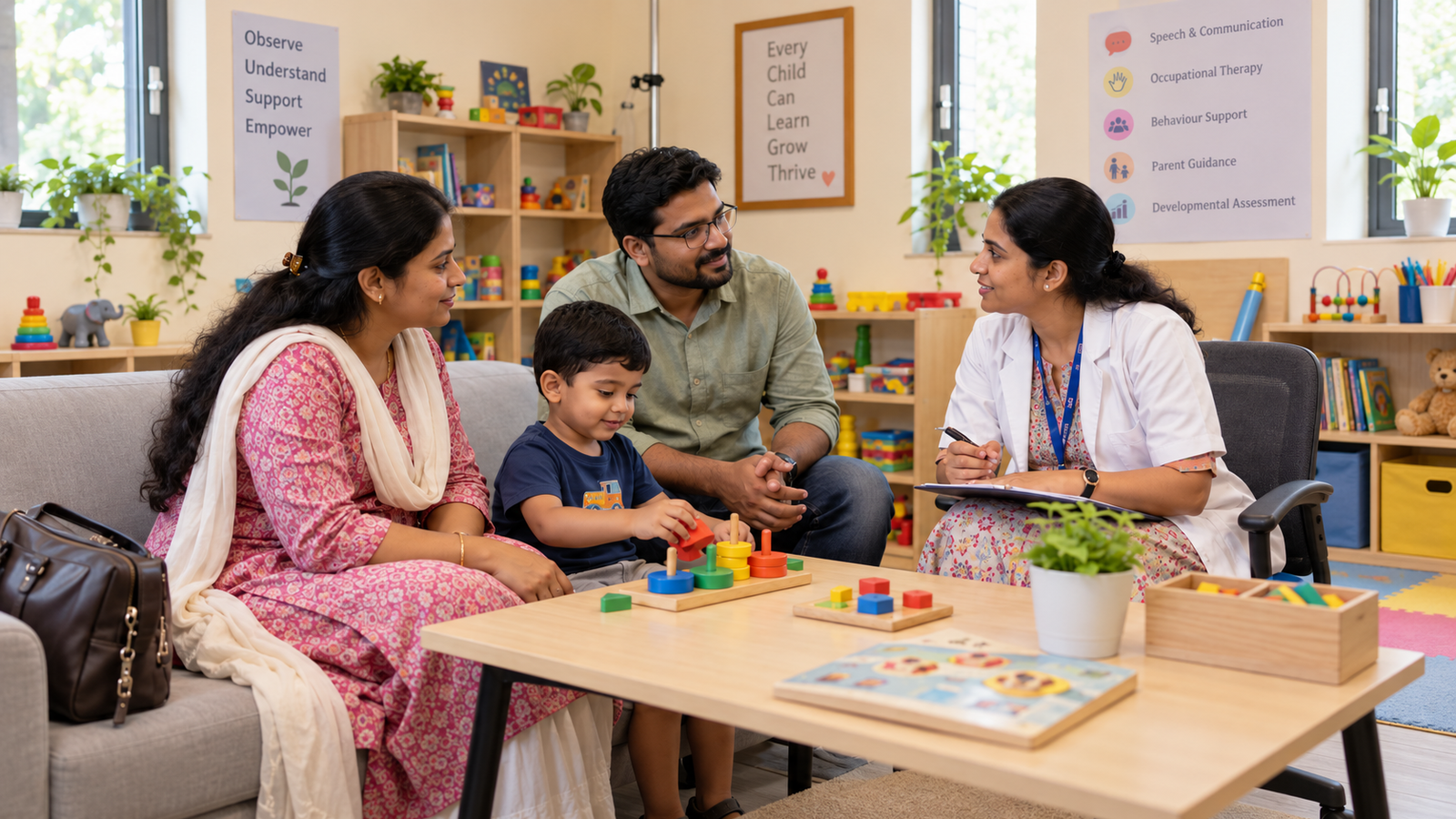
A medical assessment and a rehabilitation assessment serve different purposes.
A qualified medical professional evaluates potential health conditions, considers the need for diagnostic investigations and determines whether medication is appropriate.
Rehabilitation professionals may assess communication, sensory needs, functional abilities and behaviour-related difficulties within their professional scope.
Some children benefit from coordinated support involving more than one professional.
How Long Does Treatment Take to Show Improvement?
Parents understandably want to know when aggressive behaviour will begin to reduce.
The answer depends on what is contributing to the behaviour, how severe it is, the child's communication needs and whether the selected interventions address the underlying problem.
If untreated pain is the main cause, appropriate medical treatment may improve the situation relatively quickly.
When aggression is connected with communication difficulties, sensory overload or several contributing factors, meaningful progress may require continued therapy, environmental changes and family support.
Progress should not be judged only by whether aggressive episodes disappear.
Other useful signs include:
-
The child communicates discomfort more effectively.
-
Aggressive episodes become less frequent or less severe.
-
The child recovers more comfortably after distress.
-
Parents recognise warning signs earlier.
-
Everyday activities become safer and more manageable.
Families should agree on realistic treatment goals with the professionals involved and review them regularly.
A treatment plan that is not helping should be reconsidered rather than continued indefinitely without changes.
Finding Autism Behavioural Support in Patna
Families seeking autism aggression treatment in Patna should look for services that take time to understand the child's needs before recommending an intervention.
A useful initial discussion should cover the child's developmental history, communication abilities, physical health, sensory needs and the situations in which aggression commonly occurs.
Parents may also need guidance on whether a medical consultation is necessary before beginning or modifying a rehabilitation programme.
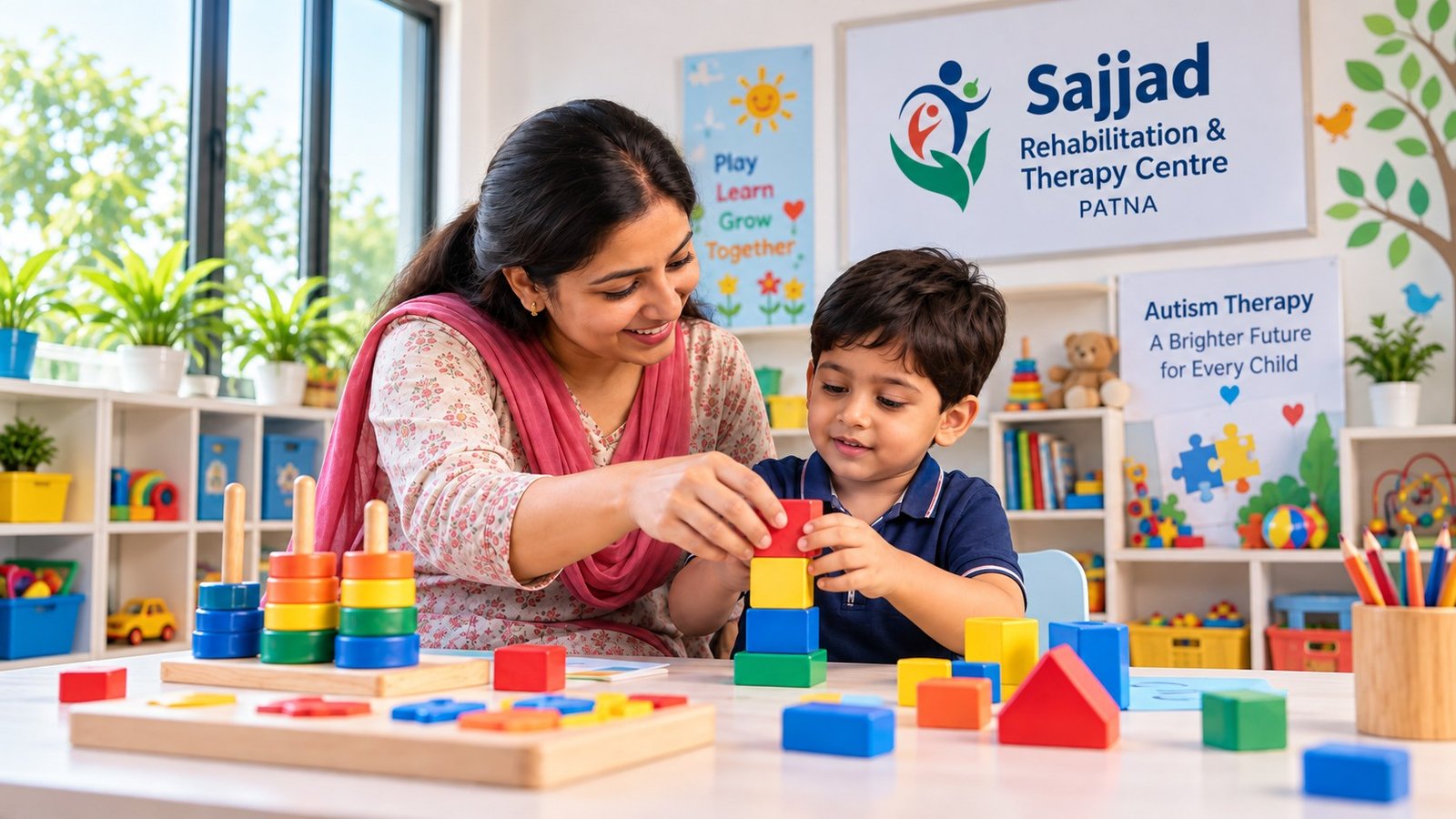
At Sajjad Rehabilitation & Therapy Centre, families can explore rehabilitation services related to child development, communication and everyday functioning.
The centre's autism therapy services in Patna describe support for communication difficulties, sensory concerns, behaviour-related challenges and daily living skills, with attention to parent involvement.
The suitability of any intervention should be determined through an individual assessment. Where medical diagnosis, medication or specialist investigation is required, families should consult an appropriately qualified medical professional.
For parents travelling from Kankarbagh, Rajendra Nagar, Boring Road, Danapur or nearby areas, it may be helpful to discuss appointment arrangements and the child's specific needs before visiting.
Sajjad Rehabilitation & Therapy Centre is located at Kali Mandir Road, Hanuman Nagar, Patna, Bihar – 800020.
Final Thoughts: Helping Your Child Feel Safe, Heard and Understood
Aggression in an autistic child should never be viewed in isolation.
Sometimes, the behaviour is connected with something the child cannot explain. At other times, several difficulties may be contributing together.
The most useful treatment begins by understanding these factors rather than immediately trying to stop the visible behaviour.
Appropriate medical assessment, individualised behavioural support, communication therapy, environmental adjustments and parent guidance can all have a place in treatment. Medication may also be considered when clinically necessary and prescribed by a qualified specialist.
The objective is not simply to make a child quieter or more compliant. It is to reduce distress, prevent injury, strengthen communication and help the child participate more comfortably in everyday life.
If your child is experiencing repeated aggressive episodes, you can contact Sajjad Rehabilitation & Therapy Centre, Patna, to discuss an appropriate rehabilitation assessment and the support your family may need.
Request an Appointment at Sajjad Rehabilitation & Therapy Centre
Medical Disclaimer: This article provides general educational information and does not replace individual medical advice, diagnosis or treatment. Aggression can have medical, developmental, psychological or environmental causes. Consult a qualified healthcare professional for an appropriate assessment. Seek emergency medical assistance if there is an immediate risk of serious injury.