
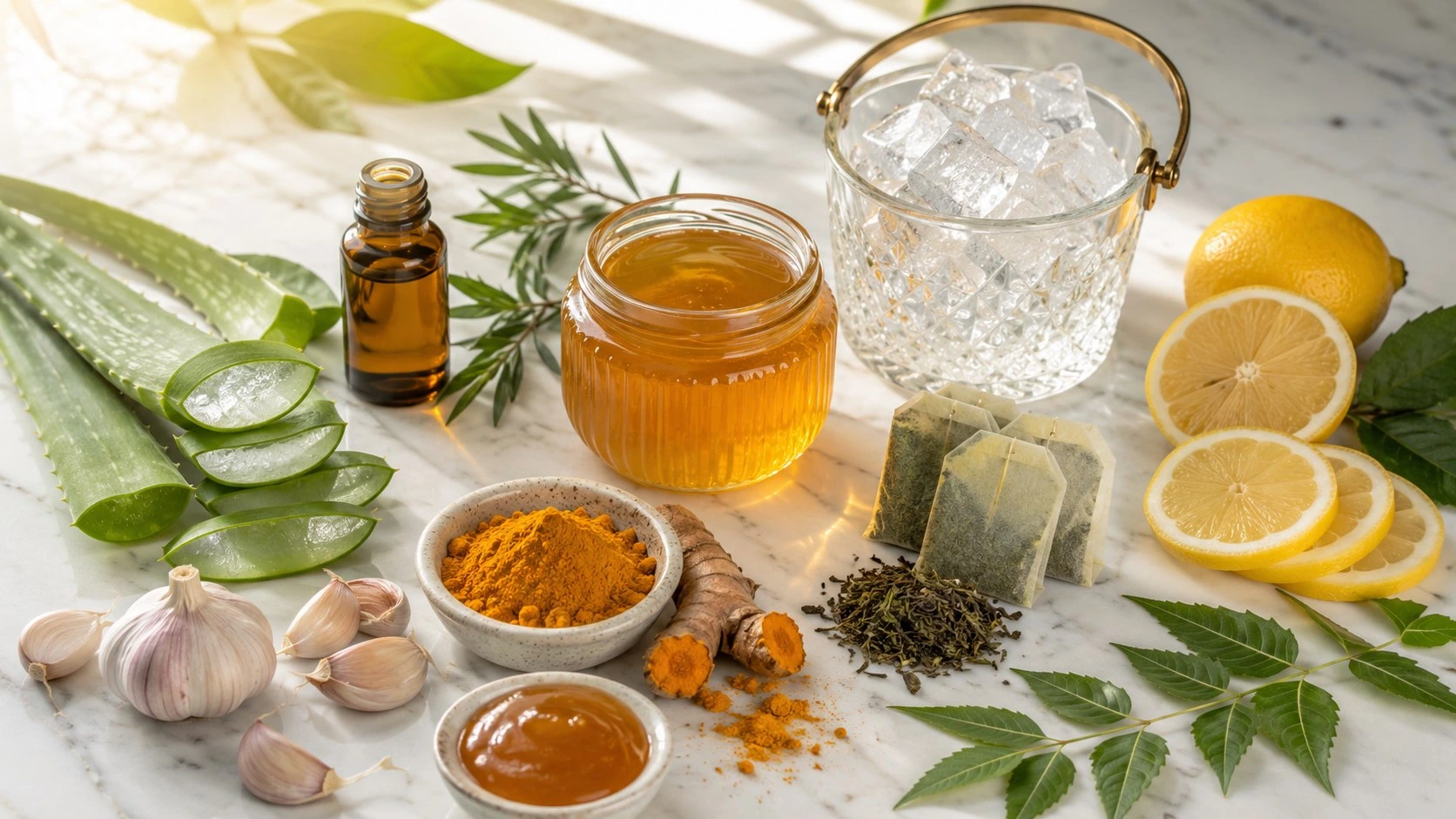
Pimples pop up at the worst times. A job interview. A first date. Picture day. And suddenly you're scrambling for something, anything, that might make it disappear overnight. The good news: you probably already have most of these remedies in your kitchen or bathroom. No expensive products, no prescriptions, no complicated routines. Just straightforward things that actually work. Here's what actually helps
10 Home Remedies for Pimples
1. Ice
Ice is the quickest fix for inflammation. It narrows blood vessels, reduces swelling, and numbs the pain. Wrap a few cubes in a clean cloth. Hold it against the pimple for 10-15 seconds, then remove for 10 seconds. Repeat a few times. Do this 2-3 times a day and you'll see the redness and size drop noticeably within 24 hours. It won't make the pimple vanish completely, but it'll take the edge off so you're not walking around looking like you lost a fight with a beehive.
2. Tea Tree Oil
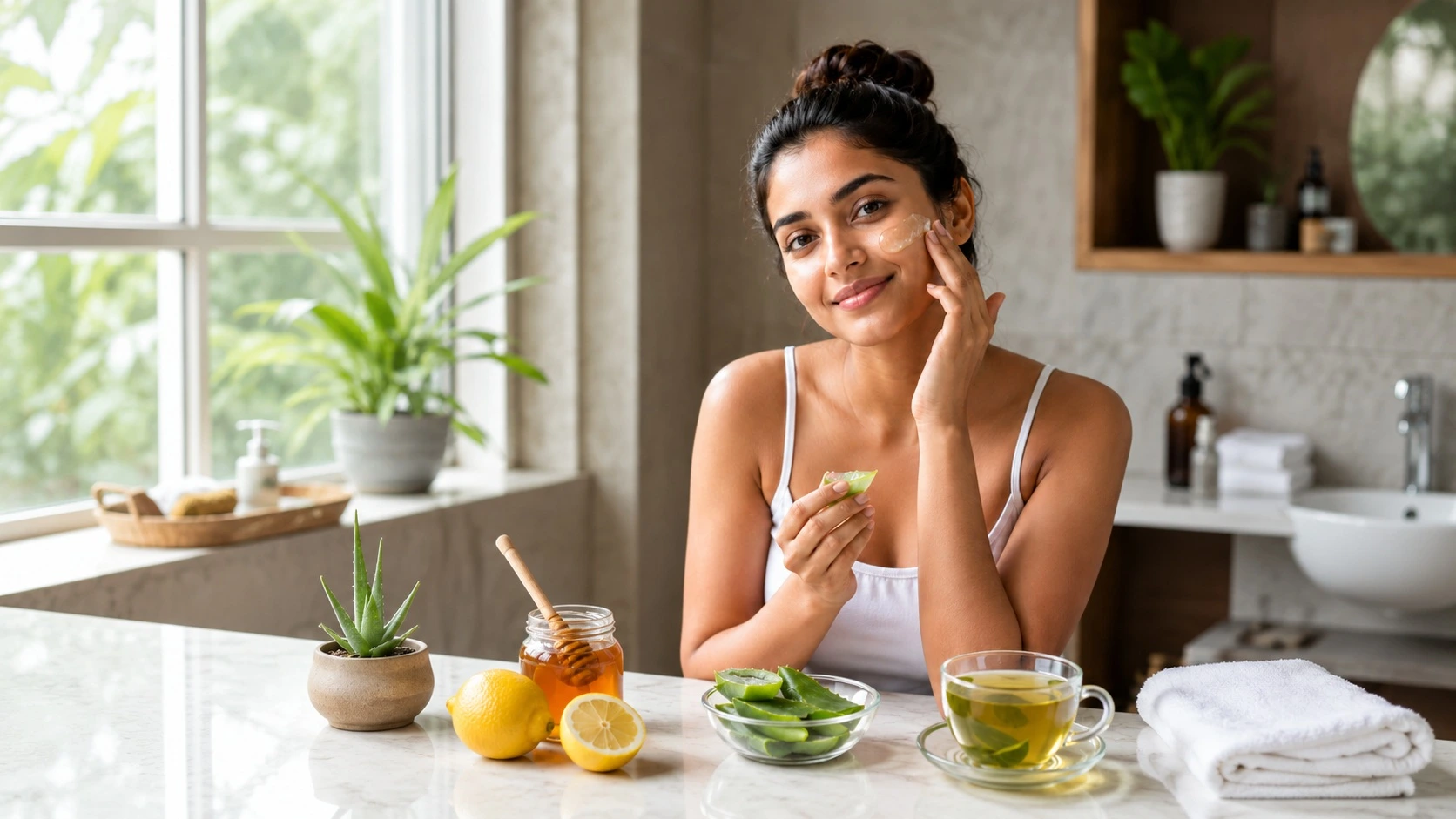
This stuff is a bacteria killer. Studies show it works as well as benzoyl peroxide, the ingredient in most drugstore acne creams, without the drying side effects. Mix 1 part tea tree oil with 9 parts water. Dip a cotton swab in and dab it directly on the pimple. Leave it overnight. You'll need to dilute it because pure tea tree oil can irritate your skin if you use it straight. If you have sensitive skin, do a patch test on your inner arm first. Wait 24 hours. If nothing happens, you're good to go.
3. Honey and Cinnamon
Honey is naturally antibacterial. Cinnamon adds extra antimicrobial punch. Together, they form a simple mask that fights the bacteria causing your breakout. Mix 2 tablespoons of honey with 1 teaspoon of cinnamon. Apply it to your face (or just the affected area) and leave it on for 10-15 minutes. Rinse with warm water. Use this 2-3 times a week. Don't leave it on longer than recommended, though. The sugars in honey can actually feed bacteria if you overdo it.
4. Aloe Vera
Aloe vera is the gold standard for calming irritated skin. It contains compounds that reduce inflammation and help skin heal faster. If you have a plant at home, slice off a leaf and squeeze out the gel. If not, buy 100% aloe vera gel from the store (read the label to make sure it's real aloe and not just "fragranced gel"). Apply a thin layer to your pimples and let it sit. You can leave it on overnight or rinse it off after 30 minutes. Either way, it'll reduce redness and speed up healing.
5. Lemon Juice
Lemon juice acts as a natural exfoliant and antimicrobial agent. The citric acid gently removes dead skin cells that clog pores. Squeeze fresh lemon juice into a bowl. Dip a cotton ball in it and apply to your pimples. Leave it on for 10-20 minutes, then rinse with water. Here's the catch: don't go out in the sun right after. Lemon makes your skin more sensitive to UV rays and you could end up with dark spots. Use this one at night. Also, if you have open wounds or broken skin, it'll sting. Skip it until those heal.
6. Garlic
Garlic is a powerful antimicrobial. It's been used for infections for thousands of years. For acne, it works the same way. Crush 2-3 garlic cloves and let them sit for 10 minutes. This activates the allicin, the compound that does the heavy lifting. Blend with a little water and apply to your pimples with a cotton swab. Leave it on for 5-10 minutes, then wash thoroughly. The smell is... intense. But so are the results. You can also just eat garlic regularly, which helps with acne from the inside out.
7. Green Tea
Green tea is packed with antioxidants that reduce inflammation and fight bacteria. You can drink it or apply it directly to your skin. Brew a cup of green tea. Let it cool. Dip a cotton ball in and apply it to your face. Do this twice a day. Or take a used green tea bag (after it's cooled), squeeze out the excess liquid, and press it directly onto your pimple for 5-10 minutes. The tannins in the tea will help shrink the pimple
8. Neem Leaves
Neem is a staple in Indian skincare for good reason. It kills bacteria, reduces oiliness, and fights inflammation. Boil a handful of neem leaves in water for 10-15 minutes. Let it cool. Use the water to wash your face once or twice a day. You can also crush the leaves into a paste and apply directly to pimples. If you can't find fresh neem, neem oil works too. Just dilute it heavily (1 part neem oil to 10 parts carrier oil like coconut or jojoba) before applying.
9. Turmeric
Turmeric is anti-inflammatory and antimicrobial. It's been used for skin conditions forever. Make a paste by mixing turmeric powder with a little water or honey. Apply it to your pimples and leave it on for 15-20 minutes. Rinse with warm water. Here's the warning: turmeric stains. It will turn your skin temporarily yellow. It washes off, but maybe don't do this right before you need to look presentable.
10. Honey (Again)
Yes, honey deserves a second mention. Specifically, manuka honey. It's more expensive than regular honey, but it's significantly more effective against acne bacteria. Apply a thin layer of manuka honey directly to your pimples. Leave it on for 30 minutes to an hour. Rinse with warm water. Do this once a day. If you can't find manuka, regular raw honey still works, just not as well.
How to Stop Pimples Coming on Face at Home
Prevention beats cure every time. Here's what actually keeps pimples away: Keep your face clean. Wash your face twice a day with a gentle cleanser. Don't scrub hard, though. That irritates skin and makes things worse. Don't touch your face. Your hands carry bacteria. Every time you rest your chin on your palm or pick at your skin, you're spreading it. Change your pillowcase. Oil and dead skin build up on your pillow. If you're breaking out on one side of your face consistently, this is probably why. Watch what you eat. Dairy and high-glycemic foods (sugar, white bread, junk food) trigger acne in some people. Cut back and see if your skin clears up. Manage stress. Stress hormones make your skin produce more oil. Meditation, exercise, sleep, whatever works for you.
Home Made Remedies for Pimples and Dark Spots
Once the pimple heals, it often leaves a dark mark behind. These spots can stick around for weeks or months. Lemon and honey combo works for dark spots too. Apply the lemon juice and honey mixture and leave it on for 15 minutes. The lemon fades the spot, the honey heals the skin. Aloe vera and vitamin E. Break open a vitamin E capsule and mix it with aloe gel. Apply to dark spots every night before bed. Vitamin E helps rebuild skin cells. Rose water and sandalwood. Mix rose water with sandalwood powder into a paste. Apply to dark spots, let dry, rinse. This has been used for centuries in Indian and Middle Eastern skincare.
Can Pimples Be Popped?
The short answer: probably not worth the risk. Here's what happens when you pop a pimple. You push the bacteria and pus deeper into your skin. You break the follicle wall. Now your body has to deal with a bigger mess. The result: more inflammation, longer healing time, and a higher chance of scarring. If you absolutely must (and I get it, sometimes you must for an event), here's the safest way: • Wait until the pimple has a visible white head. • Clean your hands and the area with rubbing alcohol. • Use clean cotton swabs, not your fingers. • Press gently on both sides. If nothing comes out easily, stop. • Apply an antiseptic like tea tree oil or neem water afterward. Don't force it. If it's not ready, you'll make it worse.
How Will a Pimple Heal Before Going to the Party?
You need fast results. Here's your emergency protocol: Morning: Ice the pimple for 10-15 minutes. Apply a thin layer of benzoyl peroxide spot treatment if you have one. Cover with a hydrocolloid pimple patch (these are cheap and work). Throughout the day: Don't touch it. Don't apply makeup directly on top if you can avoid it. If you must, use a spot cover (like a tiny sticker designed for this). Night: Apply tea tree oil or a salicylic acid treatment. Use a pimple patch overnight to keep it protected and pull out any remaining pus. The morning of: Ice again. Apply the patch. The pimple should be significantly smaller and less red. Even if it's not gone, the swelling will be down enough that makeup can hide it.
When a Pimple Causes Pain and Fever
A pimple that's painful and hot to the touch, with redness spreading beyond the pimple itself, might not be a simple pimple. It could be a cyst or nodule, or it could be infected deeper in the skin. If you have fever, chills, or the redness is spreading in a ring pattern, that's a sign your body is fighting a bigger infection. Don't try to treat this with home remedies alone.
When to See a Doctor
Home remedies work for mild to moderate acne. But see a dermatologist if: • Your acne is severe (cysts, nodules, deep lumps) • It's spreading or getting worse despite home treatment • It's causing scars • You're feeling generally unwell (fever, fatigue) • Over-the-counter products aren't helping after 6-8 weeks • It's affecting your confidence or mental health A doctor can prescribe stronger treatments like topical retinoids, antibiotics, or isotretinoin for severe cases.
Medical Treatments for Acne
If home remedies aren't cutting it, here are the medical options: Topical retinoids (adapalene, tretinoin): These are vitamin A derivatives that unclog pores and speed up skin cell turnover. You need a prescription. Benzoyl peroxide: Available over the counter. Kills bacteria and dries out excess oil. Salicylic acid: Exfoliates inside the pore to prevent clogs. Available in cleansers, toners, and spot treatments. Antibiotics (topical or oral): Kill bacteria and reduce inflammation. Used for moderate to severe acne. Hormonal [treatments Birth control pills or spironolactone can help for hormonal acne, especially in women. Isotretinoin: The heavy hitter. Used for severe, scarring acne. Has serious side effects and requires monitoring, but it can actually cure acne permanently.
Why Does a Hole Form When a Pimple Bursts?
When a pimple bursts or is popped, the follicle wall collapses. This leaves a small divot or crater in your skin. It's not actually a hole through all your skin layers, just the top layer. Think of it like a popped blister. The skin underneath is raw and new. It needs time to fill in and heal. This is why popping incorrectly causes scarring. You're damaging the skin's structure so badly it can't bounce back. The hole becomes a permanent mark.
10 Reasons for Pimples on the Face
- Hormonal changes: Puberty, periods, pregnancy, menopause all trigger breakouts
- Stress: Raises cortisol, which increases oil production
- Diet: Dairy, sugar, and processed foods can trigger acne in some people
- Genetics: If your parents had acne, you probably will too
- Bacteria: Propionibacterium acnes lives on your skin and causes breakouts
- Excess oil: Your skin produces too much sebum and clogs pores
- Dead skin cells: They build up and mix with oil to create blockages
- Certain medications: Steroids, lithium, and some birth control pills cause acne
- Cosmetics: Heavy or occlusive products clog pores
- Touching your face: Transfers bacteria and oil from your hands
Final Thoughts
Pimples are annoying but normal. Most of the time, simple home remedies handle them just fine. Ice, tea tree oil, honey, and aloe vera cover 90% of what you need. The real secret isn't finding the magic cure. It's consistency: keep your face clean, don't pick, watch what you eat, and deal with problems early. But if your acne is severe, painful, or scarring, skip the home remedies and see a dermatologist. Some things need professional help.
Frequently Asked Questions
Can ice really reduce a pimple overnight?
Ice cannot cure acne, but it constricts blood vessels to quickly reduce swelling, redness, and pain in angry, inflamed pimples.
How should tea tree oil be applied to pimples?
Always dilute tea tree oil (1 part oil to 9 parts water) and apply it directly as a spot treatment to avoid severe skin irritation.
Is it safe to leave lemon juice on pimples overnight?
No, lemon juice is highly acidic and can cause chemical burns or hyperpigmentation if left on too long, especially if exposed to sunlight.
Why does garlic help clear breakouts?
Garlic contains allicin, a compound with powerful antibacterial and anti-inflammatory properties that targets acne-causing bacteria.