Comprehensive recovery programs for Traumatic Brain Injury (TBI) designed to help survivors regain cognitive, physical, and functional independence through expert neuro-rehabilitation.
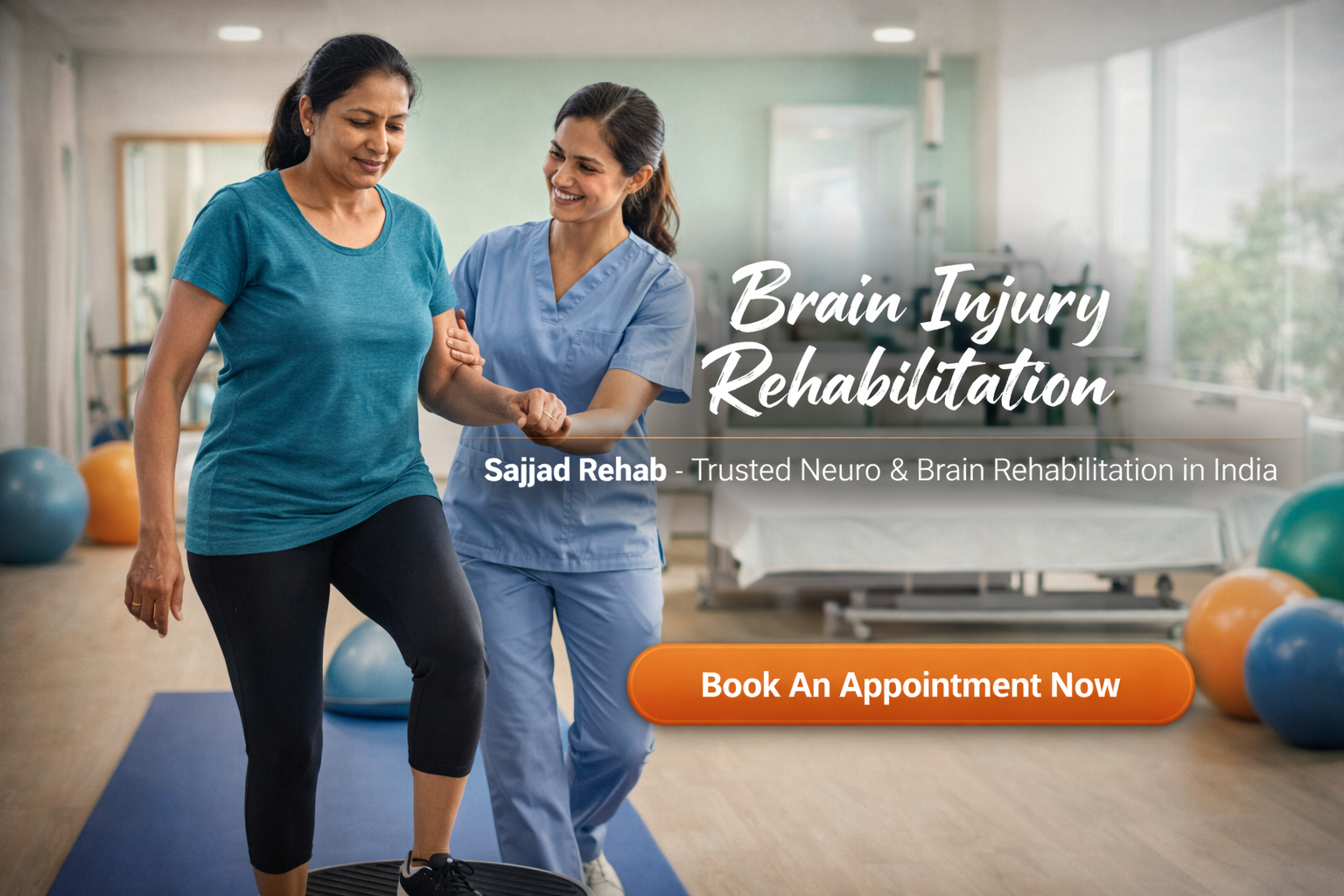
Difficulties with memory, attention, problem-solving, and planning daily activities.
Problems with balance, coordination, muscle weakness, and fatigue.
Increased irritability, impulsivity, or emotional dysregulation.
Trouble finding words (aphasia) or slurred speech (dysarthria).
Persistent headaches, dizziness, or sensitivity to light and sound.
Changes in vision, hearing, or the ability to process sensory information.
A Traumatic Brain Injury (TBI) can affect a person's cognitive abilities, physical function, and emotional well-being. Rehabilitation is a critical step in helping the brain heal and relearn lost skills through the principle of neuroplasticity.
At Sajjad Rehabilitation & Therapy Centre, we focus on a holistic approach, addressing the physical, cognitive, and functional challenges to help patients return to a meaningful life.
Rehabilitation after a TBI is a multi-faceted process. It aims to help the brain's healthy parts compensate for injured areas. This is achieved through structured, repetitive, and goal-oriented therapy.
Guided therapy is essential to ensure that recovery is both safe and effective, addressing the unique combination of challenges each patient faces.
Starting rehabilitation as soon as a patient is medically stable is crucial for TBI recovery. The brain is most capable of change in the early months following an injury. Consistent therapy helps maximize this potential for recovery and prevents long-term complications.
Start TBI RehabDetailed evaluation of cognitive, physical, and functional status.
Creating a personalized therapy plan with the patient and family.
Targeted exercises for memory, attention, and executive functions.
Balance, strength, and coordination training to improve mobility.
Practicing real-world skills for home, work, and community life.
Guiding family members on how to support the patient's recovery journey.
We use a multidisciplinary approach for brain injury recovery:
Family support is a cornerstone of successful brain injury rehabilitation. We empower caregivers by providing training on:
Recovery from a brain injury is a marathon, not a sprint. The journey is unique for every individual and depends on the severity and location of the injury. Progress can be gradual, with improvements seen over months and even years.
Our commitment: We provide honest, ethical guidance and work tirelessly to help each patient achieve their highest level of independence and quality of life.
Learn more about our comprehensive neuro rehabilitation centre and other specialized recovery services.
We are a leading brain injury rehabilitation centre in Patna, offering a multidisciplinary and ethical approach to care. Our team of trained neuro therapists provides one-on-one attention and creates structured recovery plans.
Serving patients from Patna and across Bihar, we are committed to providing high-quality, accessible rehabilitation for TBI survivors.
Get a professional evaluation and a personalized rehabilitation plan.
Brain injury rehabilitation should begin once the person is medically stable and the acute injury has been managed. Early rehabilitation can help address movement, balance, communication, and cognitive problems before they become more limiting.
Many people improve with cognitive rehabilitation, structured routines, and repeated practice, although the speed and amount of improvement vary. Recovery depends on injury severity, the brain area involved, and regular follow-up therapy.
Brain injury rehabilitation can address balance problems, weakness, speech difficulty, attention and memory changes, behavior changes, and difficulty with self-care or returning to everyday activities.
Brain injury recovery may continue over weeks, months, or longer depending on the severity of injury and the goals of treatment. Patients often improve in stages and benefit from consistent therapy plus home strategies.
Yes, irritability, poor impulse control, anxiety, or low mood can be part of brain injury recovery. Rehabilitation often includes behavior strategies, family education, and referral for additional support when needed.
Urgent medical review is needed for worsening headache, repeated vomiting, seizures, increasing confusion, new weakness, unusual drowsiness, or any sudden decline. These signs should not be managed only with home exercise.