Restoring movement and independence through specialized neuro physiotherapy. We provide comprehensive care for hemiplegia, paraplegia, and spinal cord injuries.
Inability to move limbs voluntarily, leading to dependency on others for daily tasks.
Significant reduction in strength, making it difficult to stand, walk, or hold objects.
Stiffness and tightness in muscles that can cause pain and restrict range of motion.
Numbness or reduced feeling, which increases the risk of injury without realizing it.
Difficulty maintaining posture while sitting or standing, increasing the risk of falls.
Risk of bedsores, joint contractures, and circulation problems due to immobility.
Paralysis is the loss of muscle function in part of your body. It happens when something goes wrong with the way messages pass between your brain and muscles. This can be due to stroke, spinal cord injury, or nerve damage.
Rehabilitation is essential to retrain the nervous system and prevent complications. At Sajjad Rehabilitation & Therapy Centre, we focus on maximizing your functional potential and independence.
Even when nerve cells are damaged, the brain has an amazing ability to reorganize itself. This is called neuroplasticity. Rehabilitation helps guide this process.
Through repetitive, specific exercises, we aim to:
Starting rehabilitation as soon as the patient is medically stable is crucial. Early mobilization helps prevent muscle wasting and joint stiffness, which can otherwise become permanent. It also boosts the patient's morale and speeds up the recovery process.
Start Early RehabEvaluation of muscle power, tone, sensation, and functional abilities.
Therapist-assisted movements to maintain joint flexibility and prevent stiffness.
Encouraging the patient to initiate movement to strengthen muscles.
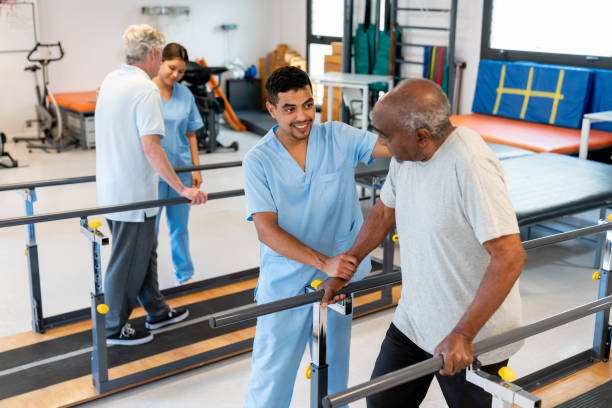
Training for bed mobility, transfers (bed to chair), and standing.
Re-learning to walk with or without support aids like walkers or sticks.
Continuous monitoring to prevent falls and ensure safe practice.
We utilize a range of specialized techniques tailored to the patient's condition:
Family plays a vital role in the recovery journey. We provide training and guidance to caregivers on:
Recovery from paralysis varies greatly depending on the cause (stroke vs. spinal injury) and severity (complete vs. partial). Some patients may regain full movement, while others may achieve partial recovery.
Our commitment: We focus on helping every patient achieve their maximum possible independence and improve their quality of life, regardless of the starting point.
We are a trusted paralysis rehabilitation centre in Patna, known for our ethical and patient-centric approach. Our team of experienced neuro therapists provides individualized care to ensure the best possible outcomes.
We serve patients from Patna and surrounding districts across Bihar, offering accessible and professional rehabilitation support.
Get a professional evaluation and a personalized rehabilitation plan.
Our neuro rehabilitation program offers specialized care for various neurological conditions.
Ramesh Singh
Hemiplegia Recovery
"I was unable to stand after my paralysis attack. The team at Sajjad Rehab worked with me daily. Today I can walk with a walker. Their dedication gave me a second life."
Priya Kumari
Spinal Injury Rehab
"The therapists are very knowledgeable and supportive. They taught me how to be independent in my wheelchair and manage my daily activities. I am very grateful."
Md. Irfan
Facial Paralysis
"I had facial paralysis (Bell's Palsy). The electrical stimulation and exercises helped me recover my facial expressions completely within a few weeks."
Paralysis recovery depends on the cause, severity, and how quickly treatment begins, but rehabilitation can often improve strength, movement control, transfers, and daily function. Even when full recovery is not possible, therapy can improve independence and prevent complications.
Rehabilitation can help people with hemiplegia, paraplegia, weakness after stroke, spinal cord injury, brain injury, or other neurological causes of paralysis. The treatment plan is adjusted to the person's diagnosis and current ability.
Rehabilitation should begin as soon as the patient is medically stable and the underlying cause has been assessed. Starting early helps reduce stiffness, weakness, bed-related complications, and loss of daily skills.
Some people regain standing or walking with therapy, assistive devices, and balance training, while others focus more on wheelchair mobility and transfer independence. The realistic goal depends on nerve recovery, muscle control, and overall medical status.
Paralysis rehabilitation may include physiotherapy, range-of-motion exercises, strengthening, balance training, transfer practice, gait training when appropriate, occupational therapy, and caregiver training for safe handling.
Home-based rehabilitation can be useful for patients who cannot travel easily or need continued practice in their daily environment. It works best when exercises, positioning, and safety methods are guided by a rehabilitation team.