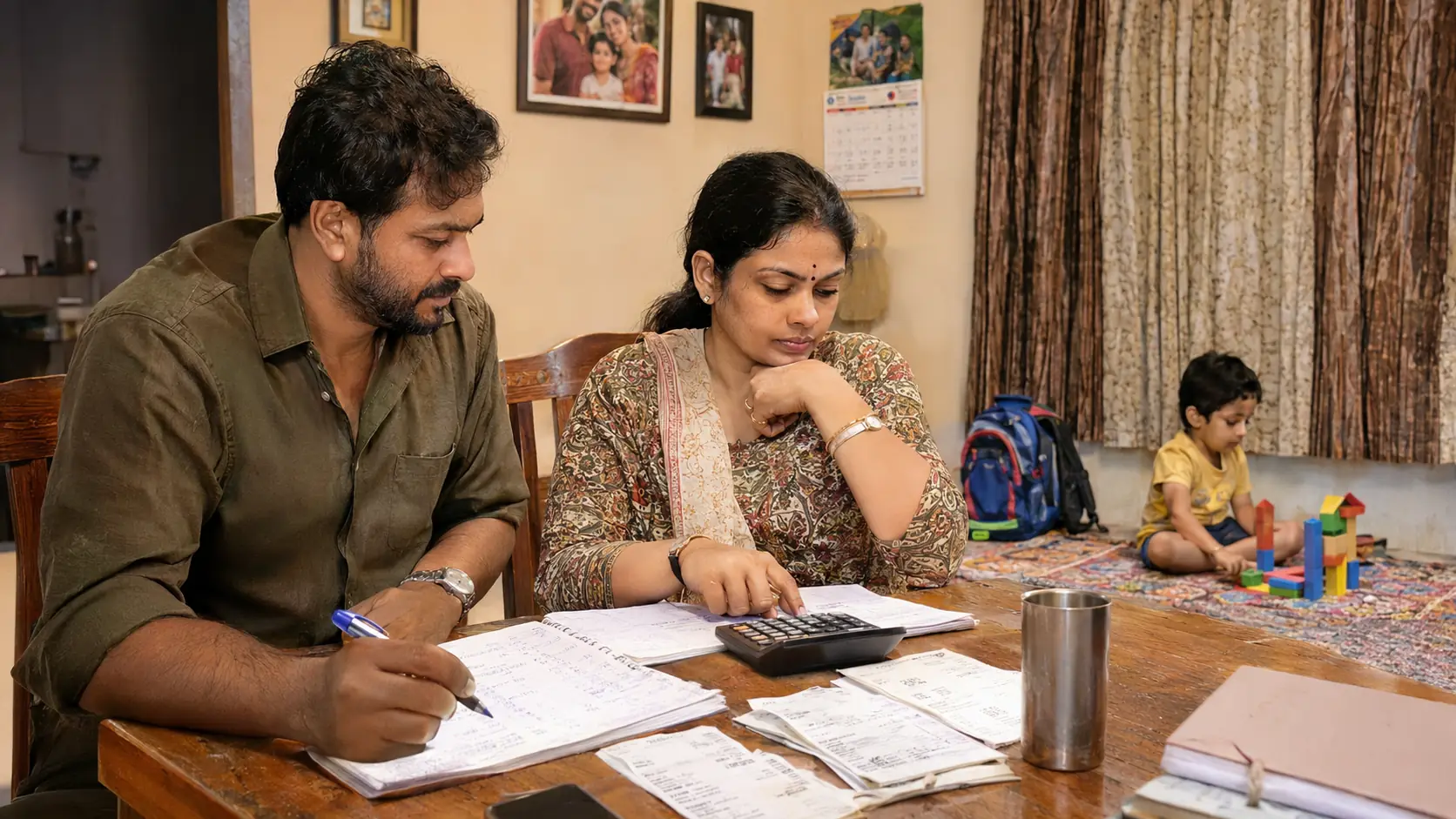
In thousands of middle and working-class homes across India, the end of the month brings a familiar arithmetic exercise. Alongside grocery bills, rent or home loan EMIs, and utility payments sits a growing stack of rehabilitation receipts: speech and language therapy, occupational therapy, special educator consultations, and school inclusion fees. For families raising an autistic child, developmental progress is celebrated in small, meaningful moments. a new communicative gesture, comfortable participation in a classroom routine, or greater ease with sensory transitions. Yet behind those milestones lies an economic reality that is rarely discussed openly: in a healthcare landscape dominated by out of pocket spending, consistent child rehabilitation and developmental support often demands a financial commitment that stretches Indian household budgets to their breaking point.
When care is funded almost entirely from family savings, access to timely, evidence-based support stops being a purely clinical question and becomes an economic one. Understanding what drives these expenses, where public systems fall short, and how families can combine public resources with home based strategies is essential for parents, clinicians, and policymakers working toward a more equitable support ecosystem.
Counting the Monthly Cost of Support in India
Autism spectrum disorder is a lifelong neurodevelopmental condition characterized by differences in social communication, sensory processing, and patterns of behavior or interests. Because no two autistic individuals have the same support profile, effective care is individualized and typically multidisciplinary rather than pharmacological. In India's private healthcare and rehabilitation sector where a large share of families seek services due to shorter wait times expenses accumulate across three distinct stages of a child's journey.
Diagnostic and Developmental Evaluations
The financial commitment begins when parents first notice developmental differences and use early autism screening and parent observation tools before seeking a formal specialist assessment (as screening tools only indicate when further evaluation is needed and do not by themselves diagnose autism). A formal multidisciplinary evaluation involving a developmental pediatrician, child psychiatrist, or clinical psychologist alongside standardized observational assessments typically ranges from approximately Rs. 3,000 to Rs. 15,000 or more in private urban hospitals and specialized child development centers. While government medical colleges and national institutes offer evaluations free of charge or at nominal registration fees, families often face waiting periods of several weeks or months for an appointment slot, pushing many anxious parents toward private clinics.
Regular Therapy from Different Specialists.
Following an assessment, clinicians frequently recommend a combination of occupational therapy, speech-language therapy, and developmental or behavioral interventions. In Tier-1 metropolitan cities such as Mumbai, Delhi-NCR, Bengaluru, Chennai, Hyderabad, and Kolkata, individual private therapy sessions generally cost between Rs. 800 and Rs. 2,500 per hour, while prices in Tier-2 and Tier-3 cities typically range from roughly Rs. 400 to Rs. 1,200 per session.
To understand how quickly these bills compound, consider an illustrative scenario of a salaried household in a Tier-2 city whose four-year-old child is recommended integrated autism, speech, and occupational therapy programs consisting of three occupational therapy sessions and three speech therapy sessions per week. Even at a moderate rate of Rs. 700 per session, six weekly sessions amount to roughly Rs. 16,800 to Rs. 18,000 per month—before accounting for daily autorickshaw or bus transit, home sensory or visual learning materials, and periodic specialist reviews. For a household earning Rs. 40,000 to Rs. 60,000 a month, therapy alone can consume 30 percent to 45 percent of total monthly income.
School Extra Fees and Learning Support.
As children reach school age, financial pressure frequently shifts rather than subsides. Although India's Rights of Persons with Disabilities (RPwD) Act, 2016 mandates inclusive education, many private mainstream schools require parents to pay separately for in-school resource rooms, special educators, or a dedicated one-on-one shadow teacher to support the child in class. Shadow support fees often add Rs. 8,000 to Rs. 25,000 per month on top of standard school tuition, leaving many families to choose between costly private inclusion, specialized schools, or homeschooling.
Main Reasons Behind Financial Problems.
Why does autism support carry such a steep price tag for Indian households? Four interconnected systemic factors shape the current landscape:
- Lack of Specialists, Especially in Rural Areas: Rehabilitation specialists, including psychologists, special educators, speech therapists, and occupational therapists, are mostly available in big cities. Families living in smaller towns or rural districts often face a difficult choice: travel hours each week for sessions or temporarily relocate one parent and the child to a larger city while paying rent in two places.
- High Medical Costs Paid by Families: Most families in India pay for outpatient healthcare from their own pockets. Because autism support consists almost entirely of outpatient rehabilitation and educational services rather than inpatient hospitalization, families rarely benefit from standard hospital Pre-approved insurance policies.
- The Financial Burden of Family Caregiving: Unpaid caregiving responsibilities reduce household income at the exact moment expenses rise. In many Indian families, the logistical demands of taking a child to multiple weekly appointments and managing limited school hours force one parent—most often the mother—to step back from full-time employment or pass up career advancement.
- Risk of Costly, Unproven Treatments: Financial desperation makes families vulnerable to costly, unproven interventions. When parents feel overwhelmed by long timelines and recurring therapy bills, they can become targets for commercial clinics promoting pseudoscientific claims—such as unproven stem-cell infusions, hyperbaric oxygen packages, chelation therapy, or restrictive biomedical regimens. Clinical bodies including the Indian Academy of Pediatrics (IAP) and the Indian Psychiatric Society emphasize that such non-evidence-based interventions lack reliable scientific backing for core autism traits and can cause both physical harm and severe financial depletion.
Policy Promises vs. Ground Reality: What Statutory Support Exists?
India has established several legislative and welfare frameworks intended to support persons with disabilities, including autism. However, awareness gaps, documentation hurdles, and coverage ceilings mean that many families struggle to translate statutory rights into meaningful financial relief:
- Rights of Persons with Disabilities (RPwD) Act, 2016: Under the RPwD Act, autism spectrum disorder is explicitly recognized as a benchmark disability when meeting specified certification thresholds. This entitles eligible individuals to non-discrimination in education, government concessions, and social security measures accessed through the Unique Disability ID (UDID) card.
- The National Trust and Niramaya Health Insurance Scheme: For direct health coverage, The National Trust (constituted under the National Trust Act of 1999 for autism, cerebral palsy, intellectual disability, and multiple disabilities) administers the Niramaya Health Insurance Scheme. Niramaya provides coverage of up to Rs. 1,00,000 per year on a reimbursement basis, which includes outpatient occupational and speech therapy as well as medical expenses for enrolled beneficiaries, with nominal enrollment fees scaled to family income. While Niramaya is a vital lifeline, its Rs. 1 lakh annual ceiling often covers only a fraction of year-round intensive therapy in urban private centers.
- Rashtriya Bal Swasthya Karyakram (RBSK) and DEICs: In the public health system, the Rashtriya Bal Swasthya Karyakram under the National Health Mission (NHM) establishes District Early Intervention Centres (DEICs) to provide free screening, diagnosis, and early intervention services for children up to six years of age. While DEICs offer crucial district-level access, staffing vacancies and high caseloads vary considerably across states.
- Income Tax Deductions (Section 80DD and Section 80U): On the taxation front, Section 80DD and Section 80U of the Indian Income Tax Act allow resident taxpayers supporting a dependent with a certified disability (under applicable tax regimes) to claim a fixed annual deduction—currently Rs. 75,000 for benchmark disability between 40 percent and 79 percent, and Rs. 1,25,000 for severe disability of 80 percent or more—from their taxable income. Because this is an income tax deduction rather than a direct cash grant, it primarily assists formal-sector taxpayers and offers no direct financial relief to families whose earnings fall below the income tax threshold.
- Commercial Health Insurance and IRDAI Directives: Although the Insurance Regulatory and Development Authority of India (IRDAI) has issued directives aimed at ending blanket policy exclusions for mental illnesses and neurodevelopmental conditions, most commercial retail health insurance plans still restrict or exclude routine outpatient habilitative therapies, where the vast majority of autism-related spending occurs.
Practical Ways Families Can Navigate and Reduce Support Costs
While systemic reforms in insurance and public infrastructure remain urgent, families and clinicians can adopt practical, evidence-informed strategies to make support more sustainable without compromising a child's development.
Prioritize Parent-Mediated and Home-Integrated Models
Research consistently shows that parent-mediated interventions—where therapists coach parents and caregivers to embed communication, sensory regulation, and daily living strategies into everyday home routines—are both clinically effective and empowering. Rather than paying exclusively for high-frequency, clinician-only sessions behind closed doors, families can explore structured home-based autism care and parent guidance where therapists actively train caregivers during appointments. When daily meals, bath time, and play become opportunities for supported communication, fewer paid clinic hours can still yield meaningful, lasting progress.
Utilize National Institutes, Medical Colleges, and Non-Profit Centers
Before committing exclusively to high-cost private clinics, families can explore services at public institutions and registered non-profit organizations. Premier public centers—such as the National Institute for Empowerment of Persons with Multiple Disabilities (NIEPMD) in Chennai, the All India Institute of Speech and Hearing (AIISH) in Mysuru, the National Institute of Mental Health and Neurosciences (NIMHANS) in Bengaluru, AIIMS centers across states, government medical college pediatrics and psychiatry departments, and university speech and occupational therapy training clinics—offer comprehensive assessments, therapy blocks, and structured parent-training programs at heavily subsidized rates.
Focus on Functional, Collaborative Goal Setting
Families do not need to enroll in every therapy modality simultaneously if doing so creates unsustainable financial distress. Understanding how to approach choosing the right autism treatment center and personalized therapy plan helps parents work with a trusted developmental team to identify one or two high-priority functional goals for a three-to-six-month window. Whether the focus is establishing a reliable communication system (including Augmentative and Alternative Communication, or AAC) or addressing a specific sensory-motor barrier, selecting goal-oriented autism therapy for your child allows households to direct financial resources where they matter most right now.
Guard Against Unproven Commercial Claims
One of the most effective ways to protect a family's long-term financial stability is to avoid high-cost procedures that promise to cure or reverse autism. Evidence-based autism support focuses on skill building, communication, environmental accommodation, and co-occurring medical or mental health care—not the biological eradication of neurodivergent traits. Before paying for any costly biomedical or device-based program, families should review independent clinical practice guidelines or seek a second opinion from a public medical college specialist.
Complete UDID Registration Early
Obtaining a formal disability certificate and Unique Disability ID (UDID) card through the government's Swavlamban portal opens access to the Niramaya Health Insurance Scheme, state disability pensions, railway and public transport concessions for the autistic person and an escort, and income tax deductions under Section 80DD.
What Parents Also Want to Know
Can parents deliver effective autism support at home if private therapy is unaffordable?
Yes. Parent-mediated developmental and behavioral strategies are well-supported by clinical research, including studies conducted in South Asian settings such as the PASS (Parent-mediated intervention for Autism Spectrum Disorder in South Asia) trial. While professional guidance helps tailor strategies to a child's profile, consistent, responsive interaction during everyday home routines is one of the strongest drivers of communication and adaptive skill growth.
Does the Niramaya Health Insurance Scheme cover outpatient speech and occupational therapy?
Yes, under The National Trust's Niramaya Health Insurance Scheme, enrolled individuals with autism can claim reimbursement for eligible outpatient medical and therapy expenses, including occupational and speech therapy, up to the policy's overall annual limit of Rs. 1,00,000, subject to scheme sub-limits and valid documentation from registered professionals.
Are private schools in India legally allowed to deny admission to autistic children?
Under the Rights of Persons with Disabilities (RPwD) Act, 2016 and the Right of Children to Free and Compulsory Education (RTE) Act, recognized educational institutions are mandated to provide inclusive education and reasonable accommodations without discrimination. In practice, however, enforcement varies, and families often benefit from connecting with local parent advocacy networks or state Disability Commissioners when navigating school admission barriers.
Moving From Household Survival to Collective Support
No family should have to choose between depleting their life savings and giving their autistic child the tools to communicate, learn, and thrive. When the cost of progress falls almost entirely on individual households, early support becomes a privilege of income and geography rather than a universal right.
Easing this burden requires action on multiple fronts: expanding the number of trained rehabilitation professionals in public district hospitals, enforcing insurance coverage for outpatient developmental therapies, strengthening inclusive classrooms in public and private schools, and centering parent-coaching models that empower families rather than fostering dependency on expensive clinical hours. Until those structural changes take hold, combining evidence-based home strategies, public rehabilitation networks, and parent community advocacy remains the most resilient path forward for Indian families.
Sources and Official References
- Department of Empowerment of Persons with Disabilities (DEPwD) & Rights of Persons with Disabilities (RPwD) Act, 2016: Ministry of Social Justice and Empowerment, Government of India — https://depwd.gov.in/
- Unique Disability ID (UDID) & Swavlamban Portal: Government of India Disability Certification and Welfare Portal — https://www.swavlambancard.gov.in/
- The National Trust & Niramaya Health Insurance Scheme: Statutory Body under the Ministry of Social Justice and Empowerment (Autism, Cerebral Palsy, Intellectual Disability, and Multiple Disabilities) — https://thenationaltrust.gov.in/
- Rashtriya Bal Swasthya Karyakram (RBSK) & District Early Intervention Centres (DEICs): National Health Mission, Ministry of Health and Family Welfare, Government of India — https://nhm.gov.in/
- Rehabilitation Council of India (RCI): Statutory Regulatory Body for Rehabilitation Professionals and Special Educators — https://rehabcouncil.nic.in/
- Indian Academy of Pediatrics (IAP): Consensus Guidelines on Evaluation and Management of Autism Spectrum Disorder — https://iapindia.org/
- Income Tax Department, Government of India: Section 80DD and Section 80U Tax Deductions for Dependents with Certified Disabilities — https://www.incometax.gov.in/
- Insurance Regulatory and Development Authority of India (IRDAI): Mental Healthcare and Neurodevelopmental Insurance Coverage Directives — https://irdai.gov.in/
- National Institute for Empowerment of Persons with Multiple Disabilities (NIEPMD), Chennai: Public Assessment and Rehabilitation Services — https://niepmd.tn.nic.in/
- All India Institute of Speech and Hearing (AIISH), Mysuru: Public Speech-Language and Communication Assessment Services — https://aiishmysore.in/
- National Institute of Mental Health and Neurosciences (NIMHANS), Bengaluru: Child and Adolescent Psychiatry and Neurodevelopmental Services — https://nimhans.ac.in/
- South Asian Parent-Mediated Autism Intervention Evidence (PASS Trial): Rahman et al., The Lancet Psychiatry (2016) — https://www.thelancet.com/journals/lanpsy/home