How Is Autism Spectrum Disorder Treated? A Simple Guide for Parents
How is autism spectrum disorder treated? This is a question many parents ask after finding out that their child has autism. They want to know which therapy will help, whether medicine is needed, and how long treatment may take.
The simple answer is that autism spectrum disorder (ASD) is supported through different therapies, education, and family guidance. There is no known cure for autism, but the right support can help children improve communication, learn everyday skills, and become more comfortable in different situations.
Every child with autism is different. Some need help with speaking, while others may need support with learning, movement, or managing sensory difficulties.
Let's understand how autism treatment works and what parents should expect.
What Is Autism Spectrum Disorder?
Autism spectrum disorder is a lifelong condition related to how the brain develops.
It affects how a person communicates, learns, interacts with others, and experiences the world.
For example, some autistic children may not speak as early as expected. Others may find it difficult to understand social situations or feel uncomfortable with loud noises.
Some children enjoy following the same routine every day. Sudden changes may make them anxious or upset.
However, not every autistic child has the same difficulties.
This is why autism is called a spectrum.
Autism is not caused by bad parenting. It is also not an illness that needs to be cured.
How Is Autism Spectrum Disorder Treated?
Autism spectrum disorder is managed through a combination of therapies and support based on the person's needs.
There is no single treatment that works for every autistic child.
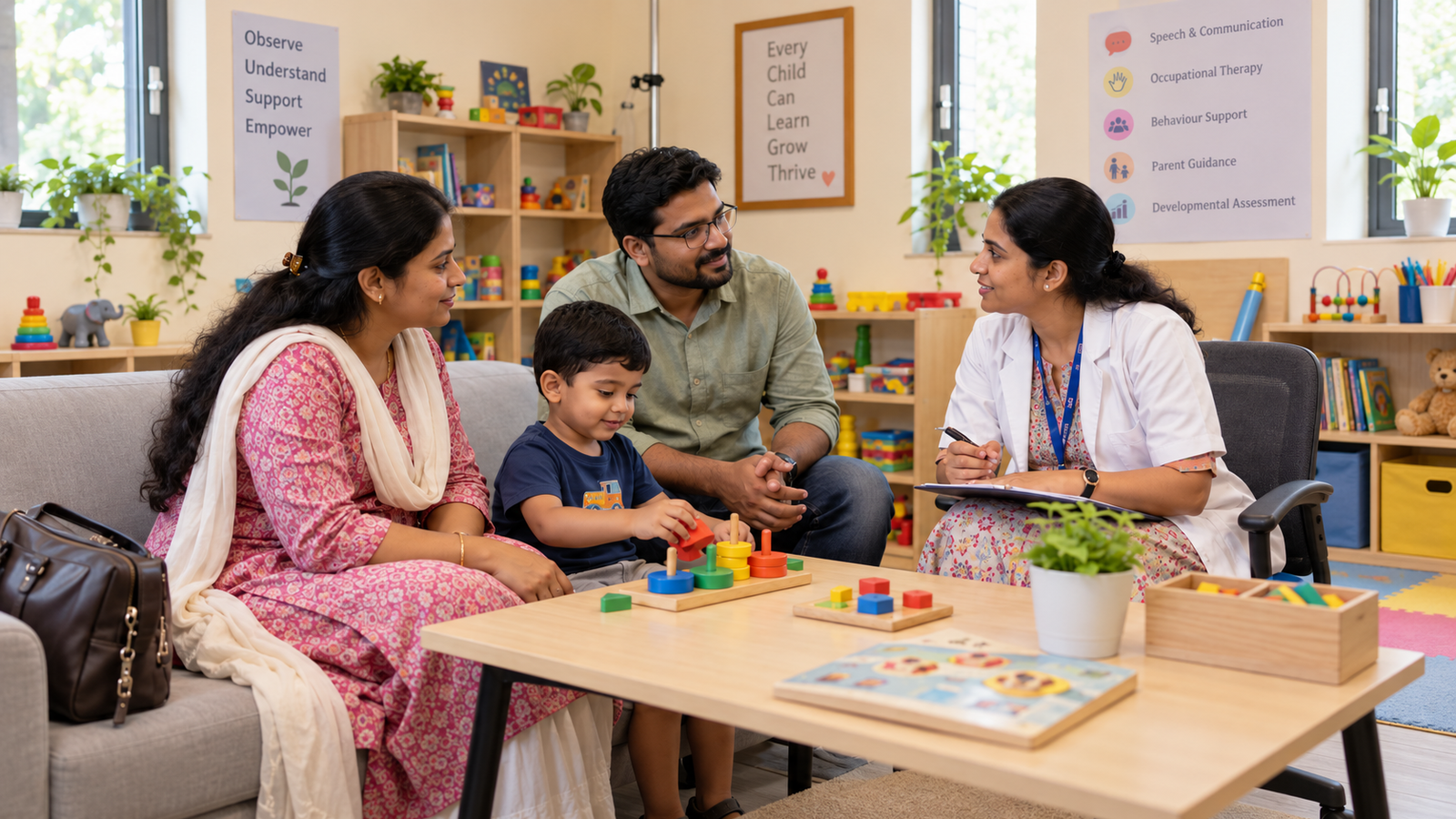
Before starting therapy, a qualified professional usually looks at the child's communication, learning, movement, behavior, and daily living skills.
Parents are also asked about the child's development and everyday challenges.
After the assessment, a care plan can be made.
For example:
-
A child with communication difficulties may benefit from speech therapy.
-
A child who struggles with dressing or eating may need occupational therapy.
-
A child experiencing emotional distress may benefit from developmental or behavioral support.
-
A child with balance or movement difficulties may need physiotherapy.
-
Parents may receive guidance to support learning at home.
The main goal is not to make an autistic child appear non-autistic. It is to help them develop useful skills and improve their quality of life.
1. Speech and Language Therapy for Autism
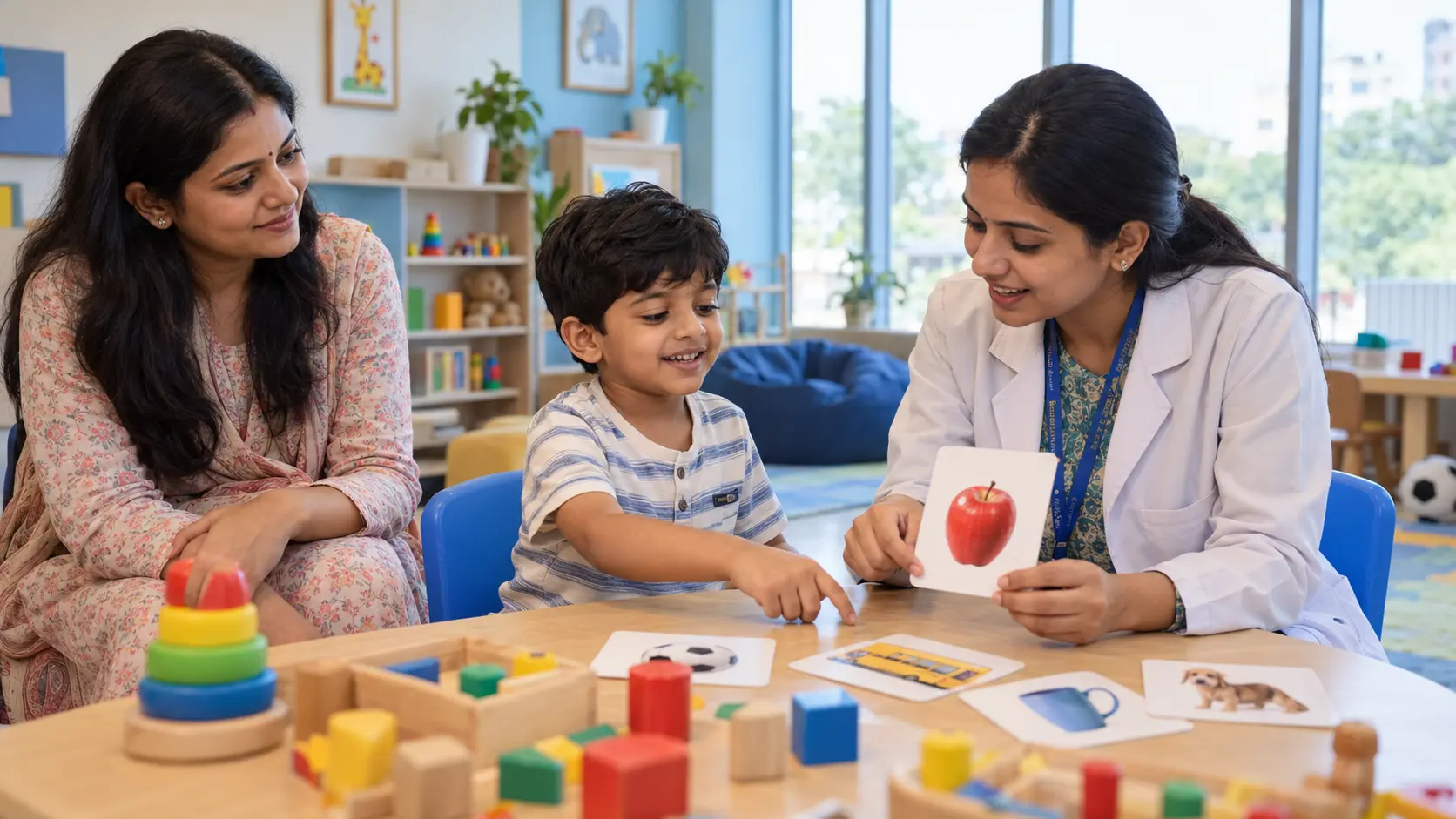
Speech therapy is one of the commonly recommended supports for autistic children with communication difficulties.
Some children may speak only a few words. Others may speak in sentences but struggle to explain their feelings or understand conversations.
Speech and language therapy can help children communicate more effectively.
A therapist may use pictures, toys, games, and simple activities during sessions.
Speech therapy may help children:
-
Express their needs
-
Understand words and instructions
-
Communicate during play
-
Develop conversation skills
-
Use gestures, pictures, or communication devices
For example, a child who cannot easily ask for water may learn to communicate that need using words, a picture, or a device.
Not every autistic child needs speech therapy. The decision depends on their communication abilities and goals.
2. Occupational Therapy for Autism
Have you noticed that your child struggles with activities such as brushing their teeth, getting dressed, or eating certain foods?
Sometimes these activities are difficult because of movement, coordination, or sensory differences.
Occupational therapy can help children develop skills needed for everyday life.
Therapy may focus on:
-
Dressing and personal care
-
Eating and mealtime skills
-
Using pencils and school materials
-
Playing and participating in activities
-
Managing difficult sensory experiences
-
Building independence in daily routines
For example, a child who finds certain clothing textures uncomfortable may benefit from changes to clothing, routines, and the surrounding environment.
The therapist works with the child and family to make daily activities easier.
3. Behavioral and Developmental Therapy
Some autistic children experience challenges with emotional regulation, communication, and changes in their daily routine.
Behavioral and developmental therapy can help children develop useful skills.
Different approaches may be used depending on the child's needs.
One approach is Applied Behavior Analysis (ABA), which uses structured teaching and practice to help develop specific skills.
Other approaches use play, natural activities, communication, and child-led interaction.
For example, a therapist may help a child learn to ask for a break when feeling overwhelmed instead of becoming increasingly distressed.
Good therapy should focus on the reasons behind a child's difficulties, respect their choices, and avoid forcing them to hide harmless autistic behaviors.
Parents should discuss the therapy goals and methods before beginning any program.
4. Physiotherapy for Children With Autism
Not every autistic child needs physiotherapy.
However, some autistic children also have difficulty with body movement, balance, posture, or coordination.
They may find running, jumping, climbing stairs, or participating in sports challenging.
In these situations, physiotherapy may help.
A physiotherapist may use play-based exercises and movement activities to support:
-
Balance and coordination
-
Muscle strength
-
Posture and body control
-
Walking and movement skills
-
Participation in physical activities
For example, a child who frequently loses balance while playing may benefit from exercises designed to improve coordination.
Physiotherapy supports movement-related needs. It does not cure autism.
5. Educational Support for Autistic Children
School is an important part of a child's daily life.
Some autistic children learn well in mainstream classrooms with suitable support. Others may benefit from additional educational services.
Teachers and families can work together to make learning easier.
Helpful changes may include:
-
Giving clear instructions
-
Using pictures or visual schedules
-
Allowing extra time for activities
-
Providing a quiet place when needed
-
Adjusting lessons to the child's learning style
-
Supporting communication in the classroom
The goal is to help children participate in education in ways that work for them.
6. Can Medicines Treat Autism Spectrum Disorder?
There is currently no medicine that cures autism or treats all of its core characteristics.
However, some autistic children also experience other health conditions.
These may include sleep difficulties, anxiety, attention problems, epilepsy, or severe irritability.
A doctor may prescribe medicine for certain problems after carefully examining the child.
Medicine is not necessary for every autistic child.
Parents should never give medicines, supplements, or alternative treatments without discussing them with a qualified healthcare professional.
Be careful with products that claim to cure autism completely.
No scientifically proven medicine or supplement can permanently remove autism.
7. Why Is Early Intervention Important?
Early intervention means providing support when developmental difficulties are first noticed.
For example, if a two-year-old child is having difficulty communicating, parents can speak with a pediatrician and ask about developmental assessment.
They do not always need to wait for a formal autism diagnosis before seeking help for speech or other developmental delays.
Early support may help children:
-
Develop communication skills
-
Participate in play and learning
-
Build daily living skills
-
Improve movement and coordination
-
Express their needs more effectively
However, starting therapy early does not guarantee a particular result.
Older children and adults can also benefit from appropriate support.
8. How Long Does Autism Treatment Take?
Many parents want to know how many months of therapy their child will need.
There is no fixed answer.
Autism is lifelong, and support needs can change as a person grows.
Some children may need help with a particular skill for a short period. Others may benefit from ongoing support in different areas.
The duration and frequency of therapy depend on the child's needs, goals, and progress.
A qualified therapist should review the care plan regularly.
Parents should avoid centers that promise complete recovery in a fixed number of days or months.
9. How Can Parents Support Autism Therapy at Home?
Therapy sessions are only one part of a child's development.
Everyday activities at home can provide useful opportunities for learning.
Here are some simple ways parents can help.
Play with your child: Choose toys and games your child enjoys. Follow their interests rather than forcing activities.
Use clear words: Give simple instructions and allow enough time for a response.
Make routines comfortable: Predictable meal, play, and sleep times may help some children feel more secure.
Encourage communication: Accept words, gestures, pictures, and other ways your child communicates.
Respect sensory needs: Notice when noise, bright lights, touch, or busy places cause discomfort.
Celebrate small achievements: Learning to ask for help or trying a new activity can be meaningful progress.
Most importantly, focus on understanding your child instead of comparing them with other children.
10. How Does Sajjad Rehab Support Autism Therapy in Patna?
Families searching for autism therapy in Patna can explore the developmental and rehabilitation services available at Sajjad Rehabilitation & Therapy Centre.
Sajjad Rehab provides autism-related support, behavior therapy, speech therapy, occupational therapy, and other rehabilitation services.
Its published approach includes assessment, individual goals, therapy sessions, and parent guidance.
The right combination of services depends on the child's needs and the recommendations of qualified professionals.
Parents can learn more about Autism Spectrum Disorder Therapy at Sajjad Rehab.
For more information about rehabilitation and child development, visit the Sajjad Rehab website.
Also know About Autism Treatment
1. How is autism spectrum disorder treated in children?
Autism is supported through therapies and services based on the child's needs. These may include speech therapy, occupational therapy, developmental or behavioral support, educational accommodations, and parent guidance.
2. What is the most effective treatment for autism?
There is no single best treatment for every autistic person. The most useful approach depends on individual needs, strengths, difficulties, and goals.
3. Can autism be cured permanently?
No. Autism is a lifelong developmental condition, and there is currently no scientifically proven cure.
4. Can speech therapy help autistic children?
Yes. Speech therapy may help children communicate through spoken language, gestures, pictures, or communication devices.
5. At what age should autism treatment begin?
Support can begin as soon as developmental difficulties are identified. Early intervention is often helpful, but suitable therapy can benefit people at any age.
6. Can autism be treated without medicine?
Yes. Many forms of autism support do not involve medicine. These include speech therapy, occupational therapy, educational support, and developmental interventions. Medicines may be prescribed for certain additional health conditions.
7. Is physiotherapy necessary for every autistic child?
No. Physiotherapy may help children who have specific movement, balance, strength, or coordination difficulties.
8. Can parents provide autism therapy at home?
Parents can support their children's development through play, communication, routines, and activities recommended by qualified professionals. Home support can complement professional services.
Final Thoughts
So, how is autism spectrum disorder treated?
The answer is through personalized therapy, family support, education, and medical care when needed.
Every autistic child has different strengths and challenges. What helps one child may not be suitable for another.
The most important step is to understand the child's needs and choose support that helps them learn, communicate, and feel comfortable in everyday life.
At Sajjad Rehab, families can explore autism-related rehabilitation services and seek guidance about suitable therapy options.
Medical Disclaimer: This article is for educational purposes only and does not replace professional medical advice, diagnosis, or treatment. Always consult a qualified healthcare professional for individual guidance.