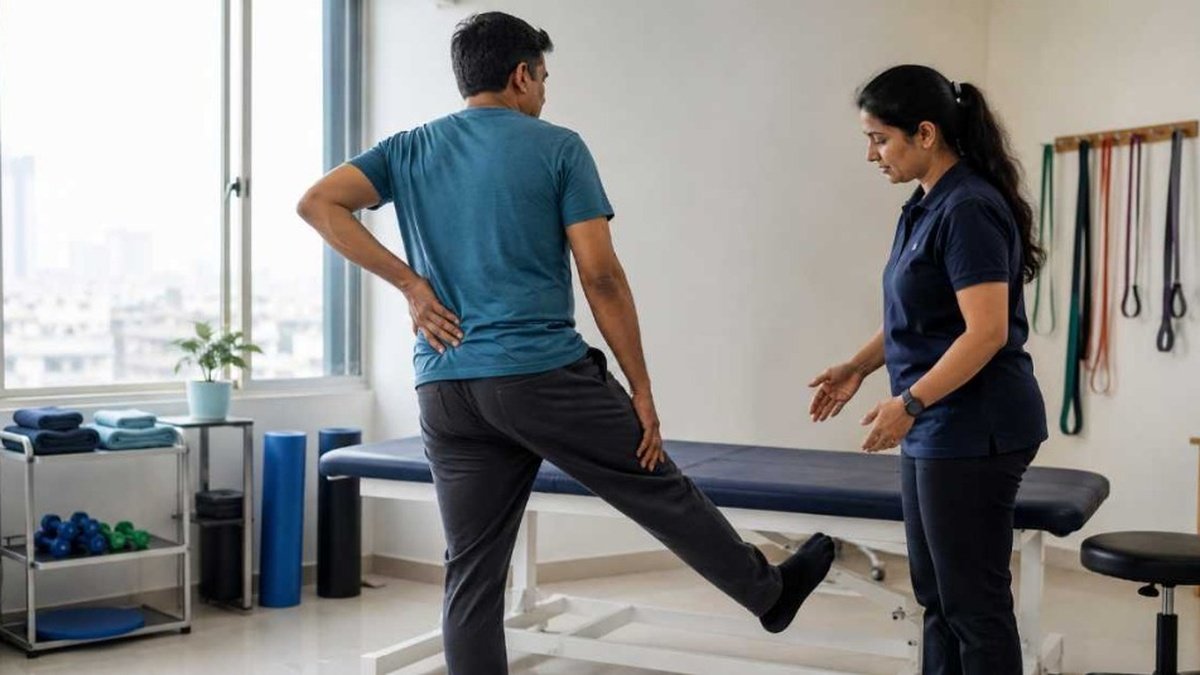

Yes, daily posture and movement choices can make sciatica easier to manage. Most people do better when they avoid staying in one position for a long time, use a supported sitting posture, choose a comfortable sleep position that keeps the spine and hips supported, and keep walking or moving as tolerated. There is no single perfect position for every patient because sciatica can come from different problems, including a slipped or herniated disc, spinal stenosis and other causes. The practical goal is simple: reduce positions that clearly increase leg pain, change position regularly, and stay gently active without forcing severe symptoms.
This guide explains how to sit, sleep, get out of bed and walk with sciatica in simple English for patients and families in Patna, Bihar and similar settings. It also explains when home care is reasonable, when physiotherapy for sciatica may help, and which warning signs need urgent medical attention.
Table of Contents
- Quick guide: sitting, sleeping and walking
- Why position and movement matter in sciatica
- How to sit with sciatica
- How to sleep with sciatica
- How to walk with sciatica
- Should you sit, lie down or walk?
- A simple daily routine
- Common mistakes to avoid
- When to get medical or physiotherapy help
- Frequently asked questions
Quick Guide: Sitting, Sleeping and Walking With Sciatica
| Activity | Usually helpful | Common problem to avoid |
|---|---|---|
| Sitting | Support the lower back, keep feet supported, sit tall but relaxed, and change position regularly. | Long periods on a deep sofa, slumped posture, or staying seated because you are afraid to move. |
| Sleeping | Try side sleeping with a pillow between the knees or back sleeping with support under the knees. Use the position that reduces symptoms. | Forcing one sleeping position even when it clearly makes leg pain, tingling or numbness worse. |
| Walking | Use short, comfortable walks and build activity gradually if symptoms remain manageable. | Pushing through severe or clearly worsening leg pain, weakness or numbness. |
| Changing position | Move between sitting, standing, lying and walking through the day. | Staying in bed or sitting for long stretches. |
A useful rule is to judge a position by what it does to your symptoms. If a posture feels comfortable and your leg symptoms stay stable or ease, it may be suitable for you. If pain starts travelling farther down the leg, numbness increases, or weakness becomes more noticeable, stop forcing that position and get professional advice if the change does not settle.
Why Position and Movement Matter in Sciatica
Sciatica is nerve-related pain that commonly travels from the lower back or buttock into one leg. It may feel sharp, burning, electric, tingling or numb. Some people also notice weakness. Sitting, bending, standing, walking, coughing or sneezing may change symptoms because these activities change the load and position of the lower spine, pelvis and irritated nerve structures.
This is why advice should not be reduced to one rule such as “never sit” or “always sleep on your side.” The cause and irritability of sciatica matter. For example, one person may feel worse with bending and prolonged sitting, while another person with spinal stenosis may feel better in a slightly flexed position. A clinician or orthopedic physiotherapy assessment can help identify which movements are helping and which are aggravating your symptoms.
Current guidance generally supports staying active and returning to normal activity as much as possible. Long periods of bed rest are not recommended because they can increase stiffness, reduce confidence in movement and lead to weakness. Short rest breaks are reasonable during a painful flare, but rest should usually be mixed with gentle movement.
How to Sit With Sciatica
1. Choose a supportive chair before chasing a “perfect” posture
A firm, stable chair is often easier to manage than a very soft sofa. Sit so your back is supported rather than hovering away from the backrest. If the chair does not support the natural curve of your lower back, a small cushion or rolled towel can be placed behind the low back if it feels comfortable.
Keep both feet supported on the floor or on a small foot support. Let your shoulders stay relaxed. Your knees and hips do not need to be held in an exact angle; comfort and regular position changes are more important than trying to hold a rigid posture all day.
2. Do not sit in one position for too long
There is no universal safe number of minutes that fits every sciatica patient. Instead of watching the clock only, watch your symptoms. If your buttock or leg pain slowly builds while sitting, stand up before it becomes severe. Walk around the room, change position, or do a gentle movement that your clinician has already advised.
For office workers, shopkeepers, drivers and people doing desk work in Patna, regular movement breaks may be more realistic than trying to avoid sitting completely. If work is making symptoms difficult to control, a personalised physiotherapy plan can include work-position changes and graded activity.
3. Use a simple method to stand up from a chair
- Move toward the front of the chair.
- Place both feet firmly on the floor.
- Lean forward only as much as feels comfortable.
- Use the armrests if needed.
- Push through the legs and stand in one smooth movement.
- Pause for a moment before walking if you feel stiff.
If standing from a chair causes strong shooting pain every time, do not keep repeating it for exercise without assessment. back and leg pain physiotherapy can help you find a safer movement strategy.
4. Floor sitting is optional
Floor sitting is common in many homes, but you do not need to force it during a flare. If cross-legged sitting or getting up from the floor increases leg symptoms, use a chair temporarily. If floor sitting feels comfortable and you can get up safely, there is no need to avoid it only because you have sciatica.
5. Sitting in a car, auto or during travel
Travel can combine sitting, vibration and limited room to change posture. Use back support if it helps, avoid carrying a thick wallet in the back pocket, and take movement breaks on longer journeys when practical. Getting in and out may be easier if you first sit on the seat and then bring the legs in together, rather than twisting sharply while half standing.
How to Sleep With Sciatica
There is no single best sleeping position for every sciatica patient. The most useful position is one that lets you rest without clearly increasing leg pain, tingling or numbness. Back and side sleeping are common starting options because pillows can be used to support the spine and pelvis.
1. Side sleeping with a pillow between the knees
Lie on the side that feels more comfortable. Many people prefer the side opposite the painful leg, but this is not a strict rule. Place a pillow between the knees so the top leg does not drop forward and twist the pelvis. Keep the head pillow high enough to support the neck without pushing the head sharply upward.
2. Back sleeping with support under the knees
If lying flat on your back is comfortable, try a pillow under the knees. Slight knee bending can reduce the amount of arching in the lower back and may feel easier during a flare. You do not need a special medical pillow; a normal pillow or folded support can be tested first.
3. Slightly bent or reclined sleeping for some spinal stenosis patients
Some people whose sciatica is related to spinal stenosis may feel better when the lower back is slightly flexed, such as in a supported side-lying or reclined position. This is not suitable for everyone. If bending makes your symptoms worse, do not copy a flexed sleep setup simply because it helped another patient.
4. Mattress firmness: do you need to buy a new mattress?
Do not rush to buy an expensive mattress during a short flare. First test simple changes with pillows, the side of the bed, or a mattress topper if available. Research on low back pain often favours medium-firm support, but personal comfort still matters. A mattress should support you without forcing the spine into an uncomfortable curve.
If you continue to wake repeatedly because of pain despite changing positions, guided physiotherapy care can assess daytime movements, sleep positions and exercises together instead of treating sleep as a separate problem.
How to Walk With Sciatica
Walking is a simple way to keep moving and is often included in conservative care. The aim is not to walk through severe pain. The aim is to maintain safe activity at a level your symptoms can tolerate and to increase it gradually as you improve.
1. Start with a distance you can tolerate
If a normal long walk feels too painful, start with a shorter walk around your home, lane or nearby flat area. You can divide activity into several short walks rather than one long walk. Increase time or distance only when the current amount is manageable.
2. Do not use pain alone as the only signal
Mild discomfort can occur during recovery, and movement is not automatically causing damage. What matters is the pattern. If walking causes rapidly increasing pain, pain travelling farther down the leg, new numbness, or increasing weakness, reduce or stop that activity and seek assessment if symptoms persist.
3. If you lean forward while walking, find out why
Some people with spinal stenosis naturally feel better leaning slightly forward. Other people bend because they are guarding pain or have become fearful of standing upright. Do not force yourself straight if it sharply increases symptoms. A musculoskeletal physiotherapy evaluation can help determine which pattern fits your condition.
4. Walking is not a substitute for assessment when weakness is present
If your foot starts dragging, you are tripping more, the leg gives way, or weakness is getting worse, do not simply increase walking to “strengthen the nerve.” Progressive weakness needs medical assessment.
Should You Sit, Lie Down or Walk During a Sciatica Flare?
| Situation | Reasonable next step |
|---|---|
| Sitting slowly increases leg pain | Stand, change position or take a short gentle walk if safe. |
| Walking clearly increases symptoms | Reduce the distance, rest briefly, then try a smaller amount later rather than forcing a long walk. |
| Lying down gives short-term relief | Use it as a rest break, but avoid spending most of the day in bed unless a clinician has told you to do so. |
| One sleep position increases tingling | Change position and adjust pillow support. |
| Symptoms are stable and activity feels manageable | Continue normal daily activity as much as possible and build gradually. |
| New or worsening weakness, saddle numbness, or bladder/bowel problems | Seek urgent medical care rather than testing more home positions. |
If you are unsure how much activity is appropriate, physiotherapy assessment and exercise advice can help set a safe starting level.
A Simple Daily Routine for Sciatica Patients
This is not a fixed treatment programme. It is a practical way to avoid long periods of inactivity while respecting symptoms.
- Morning: Get out of bed slowly. Walk around the room or home for a short period before settling into prolonged sitting.
- Breakfast and work: Use a supportive chair. Change position when symptoms start building rather than waiting for severe pain.
- Through the day: Alternate sitting with standing and short walks. Do only exercises that have been shown to be suitable for you.
- Travel: Use support if it helps and change posture when practical.
- Evening: Avoid spending the entire evening on a deep sofa if it increases symptoms. Use a comfortable chair or take short movement breaks.
- Bedtime: Test side sleeping with a pillow between the knees or back sleeping with support under the knees. Keep the setup that gives the best rest.
For patients who need a more structured programme, orthopedic rehabilitation support may include activity pacing, mobility work, strengthening and advice tailored to the cause of symptoms.
Common Mistakes That Can Make Daily Life Harder
- Staying in bed all day: short rest can be useful, but prolonged bed rest is generally discouraged.
- Searching for one magical posture: sciatica is not identical in every patient. A position that helps one person may irritate another.
- Forcing stretching because it “must loosen the nerve”: aggressive stretching can aggravate some symptoms. Exercises should be symptom-guided and appropriate to the cause.
- Ignoring increasing weakness: pain is not the only symptom that matters. Worsening weakness needs assessment.
- Buying expensive chairs, pillows or mattresses before testing simple changes: support can help, but equipment is not a guaranteed cure.
- Sitting through rising leg pain for hours: change position earlier.
- Stopping all movement because movement hurts: many people recover better with gradual return to activity rather than complete inactivity.
- Copying a social-media exercise without diagnosis: the same exercise may help one type of sciatica and aggravate another.
When to Get Medical or Physiotherapy Help
Many sciatica episodes improve over several weeks, although recovery can take longer and symptoms can return. Arrange a medical or physiotherapy assessment if pain is not improving after a few weeks of self-care, is getting worse, repeatedly disturbs sleep, or is stopping you from doing normal activities.
Seek urgent medical care immediately if you develop sciatica on both sides together with severe or worsening weakness or numbness, numbness around the genitals or anus, difficulty starting urination, inability to urinate, new loss of bladder control, or new loss of bowel control. These can be warning signs of serious nerve compression such as cauda equina syndrome.
If symptoms are not an emergency but daily sitting, sleeping or walking remains difficult, sciatica physiotherapy support may help with movement assessment, graded activity and an individual exercise plan. If the problem appears linked to the spine, joints or movement system, physiotherapy for spine and joint problems may be relevant.
Practical Next Step
For the next few days, notice which positions calm your leg symptoms and which positions make them travel farther down the leg. Use a supportive chair, change position regularly, test a comfortable side or back sleeping setup, and keep walking in short manageable amounts if safe. Do not judge recovery by one painful hour; look at the overall trend across days.
If you cannot find a comfortable pattern, pain keeps worsening, or weakness/numbness is increasing, get assessed rather than repeatedly changing pillows or trying random exercises. A clinician can help identify whether the main problem is likely to be disc-related, stenosis-related or from another cause and then match advice to that pattern.
Frequently Asked Questions
What is the best sitting position for sciatica?
A supportive, comfortable position is usually best: sit with your back supported, feet supported and shoulders relaxed. A small lumbar cushion or rolled towel may help. More important than one exact posture is changing position regularly if sitting increases your leg symptoms.
How long should I sit if I have sciatica?
There is no single safe time limit for everyone. If symptoms build while you sit, stand or change position before pain becomes severe. Frequent position changes are generally better than remaining seated for a long uninterrupted period.
What is the best sleeping position for sciatica?
Many people find side sleeping with a pillow between the knees or back sleeping with a pillow under the knees comfortable. The best position is the one that supports your body and does not clearly increase leg pain, tingling or numbness.
Should I sleep on the painful side with sciatica?
You can sleep on whichever side feels more comfortable. Some people prefer the side opposite the painful leg, but this is not a strict medical rule. Use a pillow between the knees and change sides if symptoms worsen.
Is walking good for sciatica?
Walking is commonly used to maintain activity during sciatica recovery. Start with a manageable amount and increase gradually. Reduce or stop if walking causes severe or rapidly worsening pain, new numbness or increasing weakness.
Should I rest in bed when sciatica is severe?
A short rest break may help during a painful flare, but prolonged bed rest is generally discouraged. Gentle movement and return to normal activity as tolerated are usually preferred unless a healthcare professional gives you different instructions.
Can a pillow cure sciatica?
No. A pillow can improve comfort or alignment while sitting or sleeping, but it does not treat every cause of sciatica. Persistent or worsening symptoms need proper assessment.
When should I see a physiotherapist for sciatica?
Consider assessment if pain is not improving after a few weeks, keeps returning, disturbs sleep, limits walking or work, or you are unsure which movements are safe. Seek urgent medical care instead if you have serious neurological warning signs.
What sciatica symptoms need emergency care?
Urgent assessment is needed for symptoms such as numbness around the genitals or anus, new bladder or bowel control problems, difficulty passing urine, or severe or worsening weakness or numbness in both legs. These may indicate serious nerve compression.