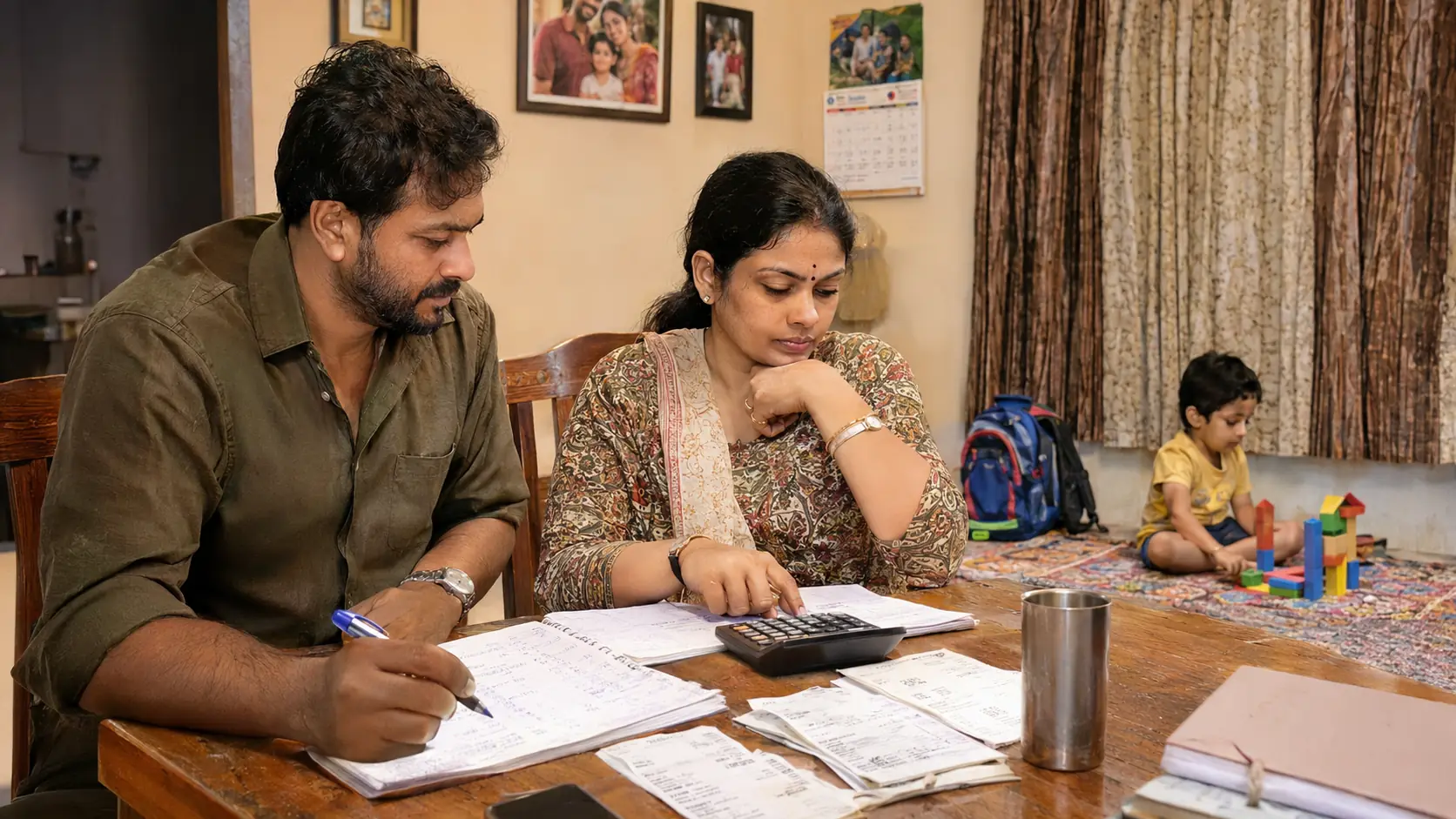

Your child has been in therapy for three months. Two sessions every week. Hundreds of rupees spent every time. And your child still says only "mama" and "paani."
If you are sitting with this feeling right now, you are not alone. Thousands of parents ask the same quiet question every day: "Is speech therapy even working for my child?"
Let's answer it honestly, without false hope and without fear.
What is speech therapy, really?
Many parents think a speech therapist "teaches the child to speak," the way a teacher teaches the alphabet. It is not quite like that.
Speech therapy is a guided way of helping a child understand, communicate and express. Words are only one part of it. A good therapist works on:
- Understanding: Does the child follow simple instructions like "give me the ball"?
- Attention: Can the child look, listen and stay with an activity for a short time?
- Sounds and words: Making sounds, then words, then small sentences
- Gestures and eye contact: Pointing, waving, showing things
- Turn-taking: The back-and-forth of a conversation, even without words
- Mouth movement: For some children, the muscles used for speech need practice
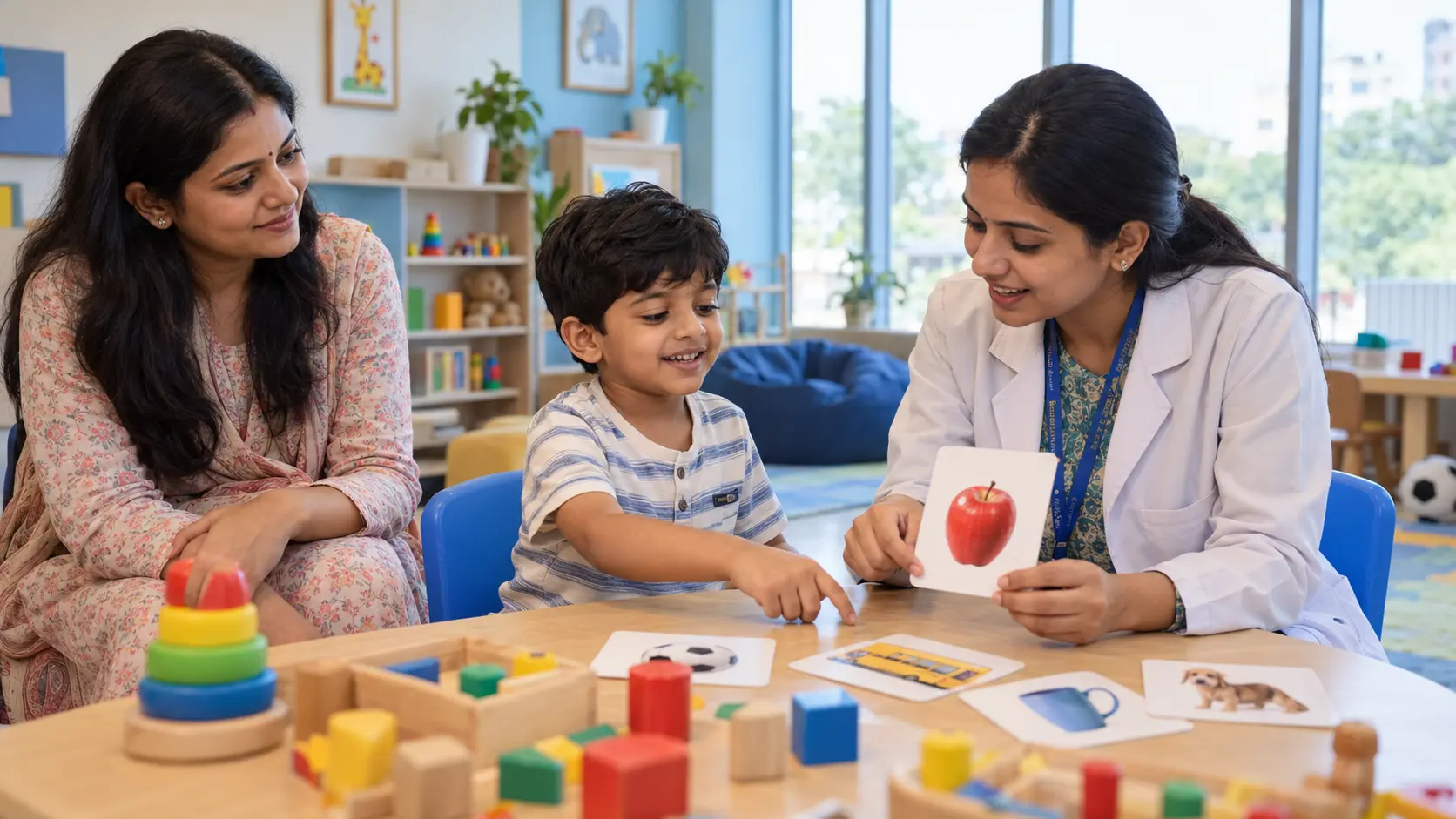
In a real session, you will not see a child sitting and repeating words. You will see play. Bubbles, toys, songs, blocks, picture cards. The child thinks it is a game. The therapist is quietly building communication inside that game.
Does speech therapy work?
For many children, yes. Studies and clinical experience agree that children who start early often make clear progress, especially when parents take part at home.
But here is the part nobody says openly: speech therapy is not a switch. It does not work in 10 days. It does not work if it happens only inside the clinic room for 40 minutes and then stops.
A child spends about 40 minutes with the therapist and the other 100 or more waking hours of the week with you. That is where the real change happens.
Why speech therapy may not seem to work
If progress is slow, it does not always mean the child cannot improve. Here are the most common reasons.
1. The real problem is not only speech. Sometimes a child is not speaking because of something wider, such as autism, a hearing problem, an intellectual delay, or a sensory issue. Speech therapy alone may help a little, but the child needs a fuller plan. This is the most common reason parents feel stuck.
2. Hearing was never checked. If a child cannot hear properly, no amount of speech therapy will give full results. A proper hearing test is the first step, and many families skip it.
3. Practice stops at home. If the therapist teaches a skill on Monday and nobody repeats it until Thursday, the child forgets. Therapy needs daily, small, natural practice.
4. Too few sessions, or too much stopping and starting. Changing therapists every month, or skipping weeks, slows everything. Children need steady, regular support.
5. The child is not ready for the goal being taught. If a child does not yet look at people or understand simple words, asking for sentences is too early. A good therapist first builds attention and connection, and this can take time.
6. Too much screen time. A child watching a mobile for hours learns very little about real conversation. Videos talk at a child. Real talking happens with a child.
7. The therapist is not a good match. This is okay to admit. If your child cries at every session, or you never get any guidance as a parent, it may be time to ask questions or try another professional.
How long does speech therapy take?
There is no honest single answer, and be careful of anyone who promises "results in one month."
- A simple late talker may start speaking more within a few months.
- A child with autism or a wider developmental delay may need a year or more, often with other therapies like occupational therapy and behaviour support alongside.
What matters is direction, not speed. Ask yourself every month: Is my child understanding more? Looking at me more? Trying to communicate in new ways? If yes, even in small steps, the therapy is moving the right way.
Signs that therapy is working
You may not hear new words yet, but look for these quiet signs:
- The child looks at you more often
- The child follows simple instructions
- The child points or pulls you to show what they want
- New sounds appear while playing
- The child sits and attends to an activity a little longer
- The child copies actions, like clapping or waving
These are the building blocks of speech. Words usually come after them.
What to do if you see no progress
Do not stop therapy in anger, and do not keep going blindly either. Take these steps.
- Talk to the therapist openly. Ask: "What is the goal for the next three months? What should I do at home?" A good therapist will answer clearly.
- Get a full developmental assessment. A child development specialist or developmental paediatrician can look at the whole picture, not just speech.
- Check hearing and vision. Simple tests, but very important.
- Ask about other therapies. Many children do best with a mix of speech therapy, occupational therapy and structured early intervention.
- Take a second opinion. It is your right, and a good professional will not mind.
What you can do at home every day
You do not need expensive tools. You need time and patience.
- Narrate your day. "Now we are washing hands. The water is cold."
- Wait. After asking a question, pause for 5 to 10 seconds. Give the child a chance to respond.
- Offer choices. "Roti or biscuit?" Hold up both so the child can point or try a sound.
- Sing and play. Rhymes, clapping games and peek-a-boo build language naturally.
- Read picture books together. Point and name things. Don't worry about reading the words.
- Reduce mobile and TV. Especially before age 2. Real faces and real voices teach more.
- Celebrate every try. Even a sound, a gesture or a look counts.
A word for tired parents
Many mothers carry this journey silently. Relatives say, "He will speak when he is ready." Others suggest shortcuts, oils, tabeez or expensive "miracle" programs. The pressure is heavy.
Please remember: you are not failing. A child who is slow to speak is not a child who is loved less or raised wrongly. The fact that you are reading, asking and trying shows how much you care.
Progress with children is rarely a straight line. There are good weeks and bad weeks. What counts is that the child keeps getting steady, loving, informed support.
When to see a specialist right away
Do not wait if:
- Your child has no words at all by 16 months
- No two-word phrases by 24 months
- Your child loses words or skills they once had
- Your child does not respond to their name or avoids eye contact
- You feel, deep inside, that something is not right
Trust that feeling. Early help makes a real difference.
disclaimer:-This article is for awareness only and is not medical advice or a diagnosis. Please consult a qualified doctor, speech-language pathologist or child development specialist for your child.